

Photo credits
XPENG Leads Chinese Presence at Paris Motor Show, European Legacy Brands Lean on Retro Styling
At the 2026 Paris Motor Show, Chinese automakers made up about a third of exhibitors and highlighted advanced technology, while many European legacy brands focused on retro‑styled concepts and discussed easing regulations.
15 Oct 2026 0 reads Compiled with AI
#XPENG #BYD #Li Auto #Geely #Leapmotor #Paris Motor Show
The 2026 Paris Motor Show featured roughly a third of its exhibitors from China, including XPENG, BYD, Li Auto, Geely, Leapmotor and Zeekr. Traditional European brands such as BMW, Porsche, Mini, Maserati, Jaguar and Land Rover had no booth, and Toyota, Nissan, Suzuki, Mazda and Mitsubishi were also absent. Honda operated a small booth with a few internal‑combustion cars, Subaru shared a space, and Hyundai/Kia presented a larger presence than all of Japan combined, mainly focusing on new hybrids. Ford displayed some old racing cars and a new Ranger trim, Jeep offered a couple of models not sold in the US, Tesla had a Cybercab on display, and Lucid announced its entry into Europe.
European exhibitors leaned heavily on retro styling that highlighted brand heritage. The Citroën 2 CV concept attracted much attention, and Alfa Romeo’s Cuore Rosso mixed past references with a futuristic feel. Other concepts such as the Fiat 600, Renault 4 and 5, ID.Polo and Peugeot E‑208 GTi all built on legacy models. Visitors, many from the same generation, recalled positive memories from their youth, raising questions about how such styling will appeal to newer buyers.
During the Paris Auto Summit, several European executives voiced a desire to weaken emissions and safety regulations to give automakers “flexibility.” They argued that easing EU standards would slow the rapid electrification of mainstream vehicles, reduce competition pressure from trade policy, and create a Europe‑specific class of small cars between quadricycles and regular vehicles. The focus on weaker regulations was seen as a potential delay to the adoption of affordable mainstream electric vehicles.
XPENG’s presence highlighted a contrasting direction. The new G9L launch represented the company’s latest technology at a competitive price and raised the bar compared to earlier models. In autonomous driving demonstrations, only XPENG and Tesla dared to take on Paris traffic; the G9L drove itself better than most human drivers on the same roads. CEO He Xiaopeng was the only non‑European executive at the summit, and he presented a tech‑driven, positive vision of the future that emphasized collaboration with European industry rather than competition.
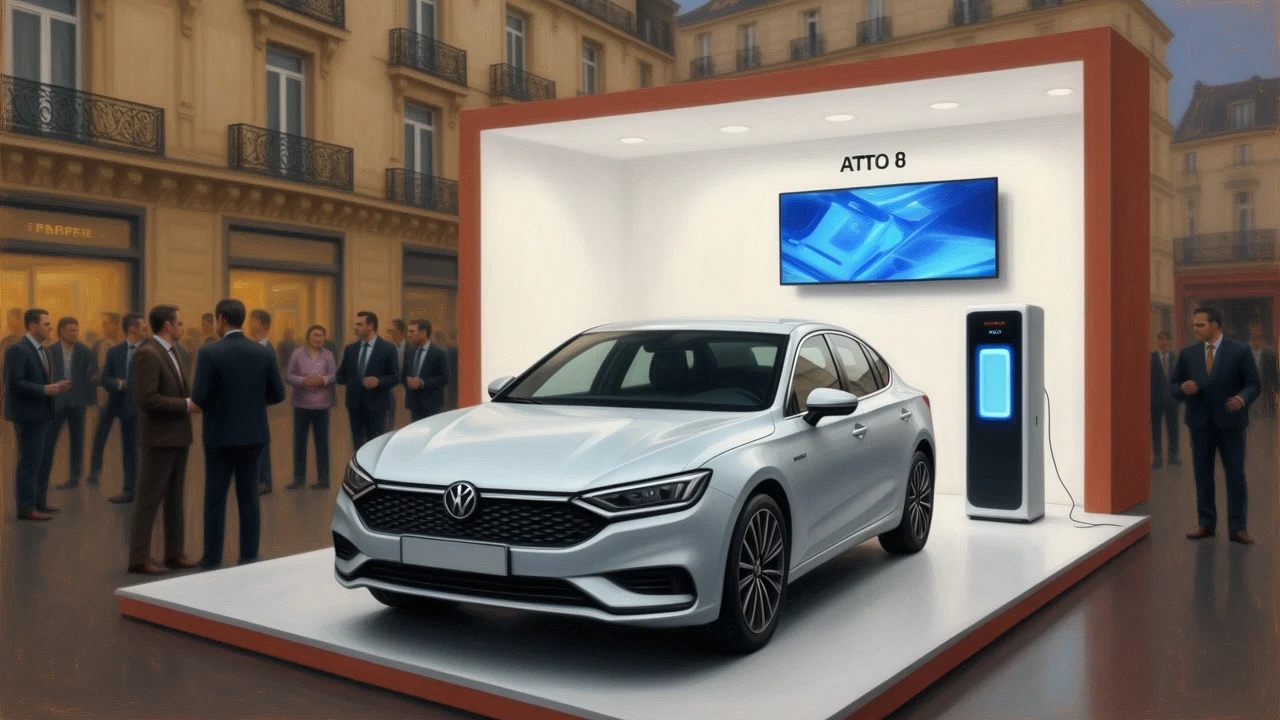
BYD introduced flash charging on the ATTO 8 (Tang L), the first appearance of the technology under the main brand in Europe on an older model that had been discontinued in China. BYD’s strategy of holding back its best models and pricing them higher was noted as a potential risk of losing its flash‑charging advantage as competitors move toward mainstream charging infrastructure.
Other Chinese brands reinforced the shift. Li Auto showcased futuristic models ahead of its 2027 European launch, Geely offered either superior technology or significantly lower pricing compared to European competitors, and Leapmotor positioned itself next to Stellantis partners, offering higher value and potential engineering sharing. Even Zeekr’s 7GT demonstrated strong value and technology advantages, despite varying styling.
The overall tone of the event suggested a sea change: Chinese automakers were leading the industry’s future narrative, while European legacy brands leaned on past styling and discussed regulatory easing. Europe has an opportunity to build partnerships and move forward, but it must do so before it falls too far behind.