

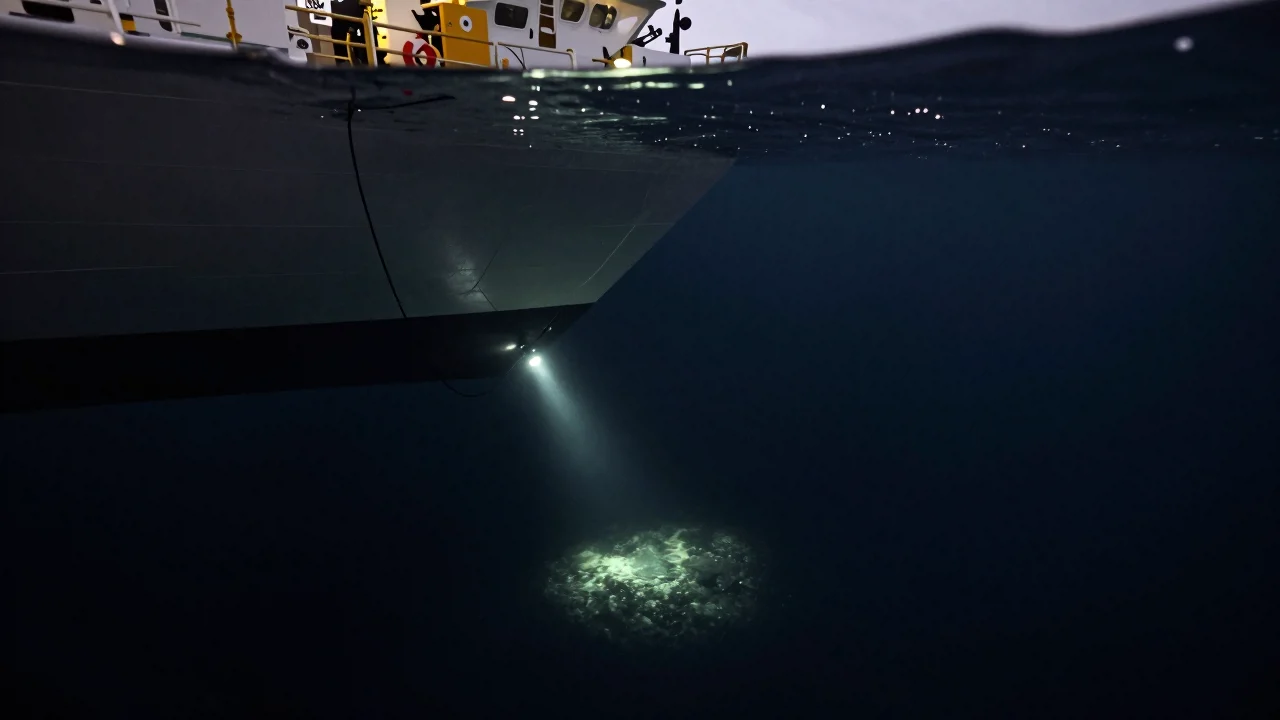
U.S. deep‑sea mining claims rival ISA territory
After a Trump executive order, U.S. companies are filing for rights to the international seabed in the Clarion‑Clipperton Zone, overlapping ISA zones and raising legal and environmental concerns.
21 Oct 2026 0 reads Compiled with AI
#United States #International Seabed Authority #Clarion‑Clipperton Zone #NOAA #Deep Seabed Hard Mineral Resources Act #UNCLOS
The International Seabed Authority (ISA) has governed deep‑sea mining in international waters since 1994 under the United Nations Convention on the Law of the Sea. The United States, which has not ratified UNCLOS, uses the Deep Seabed Hard Mineral Resources Act of 1980 to authorize exploration and potential exploitation of seabed minerals. NOAA administers this law and has issued a handful of exploration licenses, two of which remain active with Lockheed Martin. In 2025, the Trump administration issued an executive order urging the U.S. to accelerate deep‑sea mining development in both national and international waters.
U.S. claims overlap ISA zones
In the Clarion‑Clipperton Zone of the Pacific, companies have applied to the U.S. for rights to about 727,738 km² of seabed, roughly half the area that the ISA has already contracted or reserved for future mining. Seven of nine active NOAA applications come from six companies, and many of these claims overlap ISA‑approved zones and the ISA’s reserve areas meant for developing‑country benefit. The overlapping claims raise questions about who has regulatory authority over the high seas, which remain a global commons.
move might undermine multilateral governance. A lawsuit has already been filed against NOAA by conservation groups who argue that the agency violated the DSHMRA’s procedures when it certified a TMC USA application. Critics say that if NOAA issues exploitation permits, it would be a direct affront to international law and the ISA’s mandate.
Legal and environmental concerns rise
No company has yet submitted an exploitation application to the ISA, and the U.S. has not yet ratified UNCLOS, leaving its legal position contested by the ISA, the European Commission and some Chinese authorities. Kim Doster, NOAA’s communications director, said in an emailed statement that the U.S. remains committed to reasonable regard for other states while pursuing mineral recovery. The ongoing overlap of claims and the pending legal disputes indicate that the international seabed remains a contentious frontier.