

TRPV1 channel opens in distinct ways to different triggers
Scientists found that the pain‑sensing protein TRPV1 opens in several different ways depending on what activates it, a discovery that may guide safer pain medicines.
23 Oct 2026 0 reads Compiled with AI
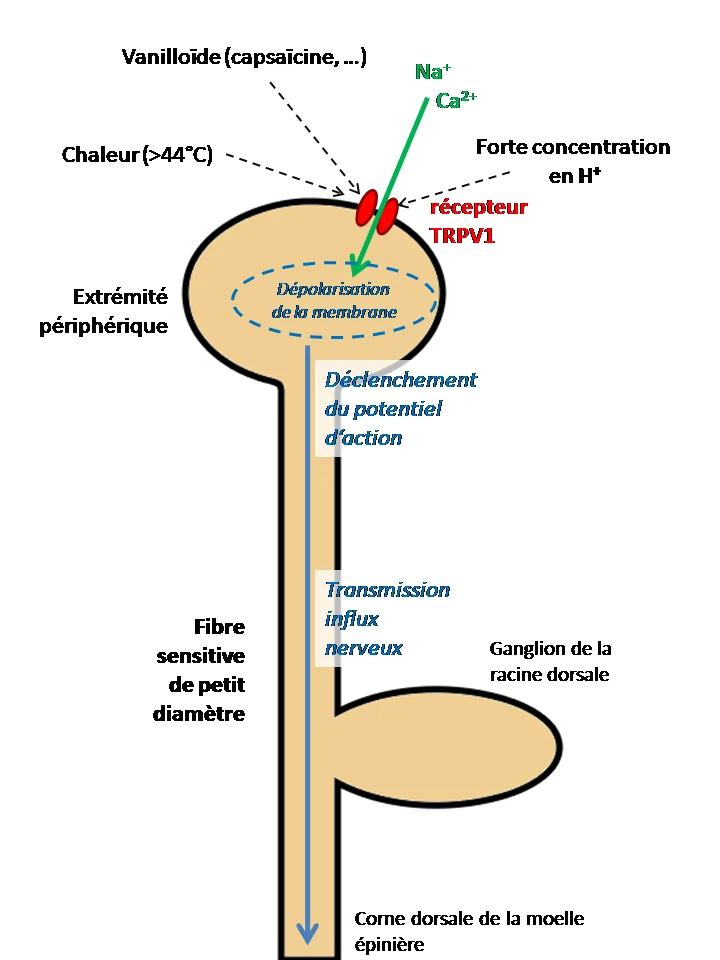
Scientists have long known that the compound capsaicin, which makes chili peppers hot, activates a pain‑sensing protein called TRPV1. The protein sits on nerve cells that detect heat, injury, inflammation and chemical signals, and it has been a target for non‑opioid pain drugs. A new study published in the journal Proceedings of the National Academy of Sciences examined how TRPV1 responds to different stimuli.
In the experiments, researchers tested five different activators of TRPV1: capsaicin, resiniferatoxin – an extremely hot toxin from a plant – acidic protons that appear during tissue damage, the chemical 2‑APB and heat. By measuring electrical currents through single TRPV1 channels, they found that each activator produced a distinct level of current, suggesting the channel opens in a different way for each trigger.

The team used several approaches to see whether the different current levels reflected changes in the channel’s shape. Ion‑permeation measurements showed that the pore of the channel behaved differently for each stimulus. Fluorescent probes attached to the protein shifted in a stimulus‑specific manner, and computational models reproduced these distinct shapes. All three methods converged on the idea that TRPV1 adopts multiple open configurations.
Unexpectedly, when two activators were applied together, the channel opened more slowly rather than faster. This finding indicates that different activation mechanisms can interfere with each other, adding another layer of complexity to how pain signals are processed.
Because blocking TRPV1 in past trials caused dangerous temperature changes, the discovery that the protein can exist in distinct states offers a possible way to target only the pain‑related forms while sparing the ones that sense heat. The study highlights a conceptual framework that could lead to safer, more precise pain medicines, but further research is needed to translate the findings into treatments.