

Photo credits
Supernova winds hinder early universe light escape
Hubble data shows supernova‑driven winds block, not aid, the escape of ionizing radiation that cleared the early universe's hydrogen fog.
22 Oct 2026 0 reads Compiled with AI
#Hubble Space Telescope #epoch of reionization
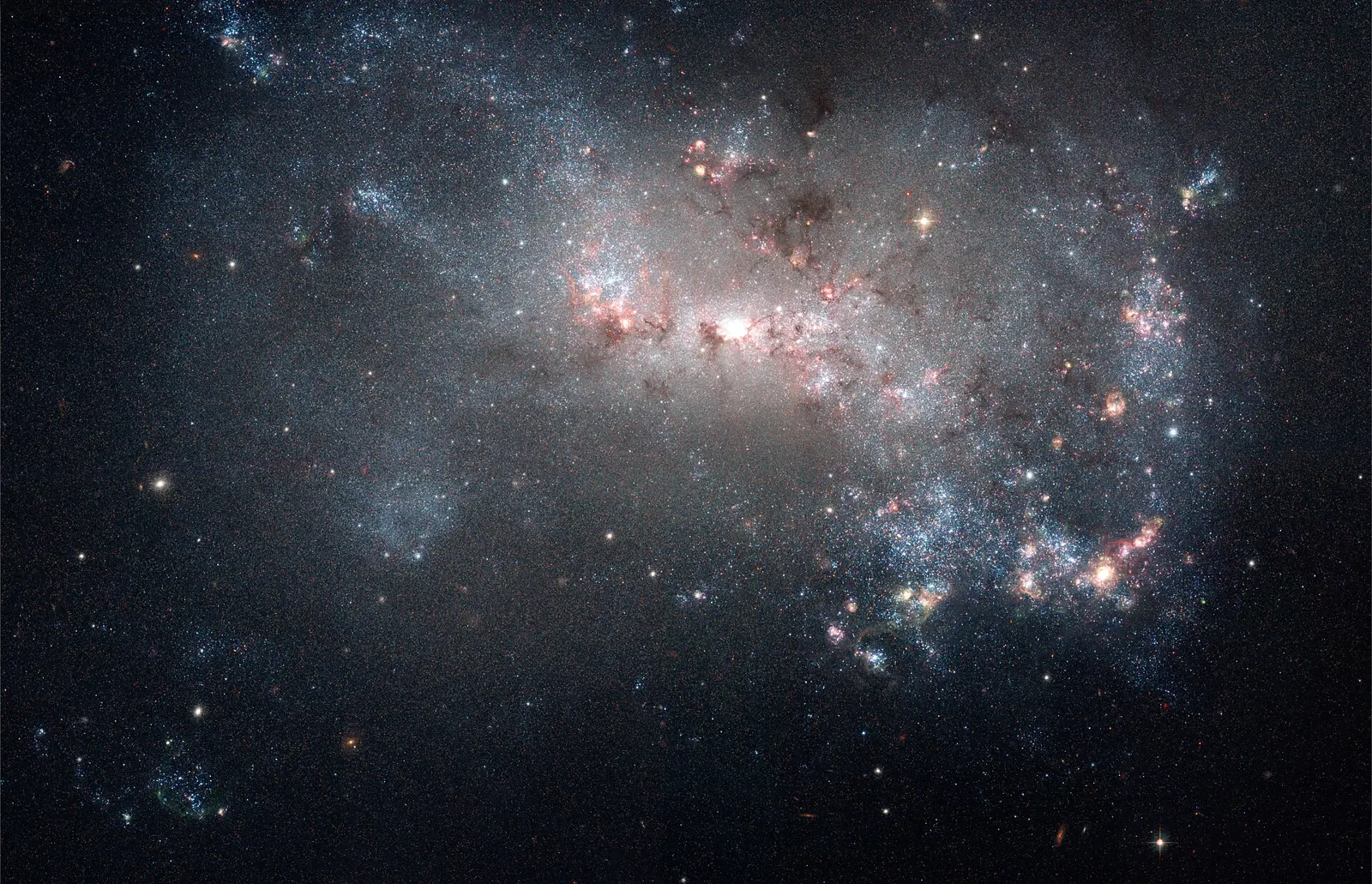
A new study using data from the Hubble Space Telescope has questioned the long‑held idea that supernova explosions helped early galaxies let ultraviolet light escape during the epoch of reionization. Scientists at the University of Michigan and Zhejiang University examined six nearby compact starburst galaxies that resemble the first galaxies in the universe. Their measurements suggest that the winds driven by supernovae actually block, rather than clear, the paths that ionizing photons need to travel.
Early escape before supernovae
Observations show that the peak of Lyman‑continuum escape occurs within the first three million years of a starburst, when intense radiation pressure and stellar winds from young, massive stars push gas outwards before the first supernovae explode. The study tracked wind velocities via Doppler shifts in absorption lines, finding that fast, mass‑loaded winds appear only after several million years, when supernovae begin to stir the surrounding interstellar medium.
Once supernovae erupt, the resulting winds carry substantial amounts of neutral gas and dust into the outflow. The increased dust and neutral gas cover more of the galaxy, raising the chance that ionizing photons are absorbed rather than escaping. The data show a strong negative correlation between wind speed and the fraction of escaping radiation, indicating that faster supernova‑driven winds suppress, rather than enhance, the escape of ultraviolet light.
This finding contradicts earlier cosmological simulations that assumed supernovae cleared channels for radiation to leak out of galaxies. According to the study’s senior author, simulations must now incorporate early radiative feedback and stellar winds from massive stars before supernova explosions occur. The new constraints suggest that the role of supernovae in reionization has been overestimated, and that young stars are the primary drivers of the early ionizing flux.
The results highlight the need for more observations of nearby starburst galaxies and for future studies with the James Webb Space Telescope, which will probe the ultraviolet brightness of true high‑redshift galaxies. Understanding the balance between young‑star winds and supernova‑driven outflows is essential for accurately modelling how the universe became transparent during its first billion years.
universetoday.com , Open Access Government , Universe Magazine