

Solar Wind Set to Reach Earth, Auroras Likely
A coronal hole’s fast solar wind will arrive at Earth tomorrow, possibly sparking minor geomagnetic storms and auroras at high latitudes.
20 Oct 2026 0 reads Compiled with AI
#Sun #Solar wind #Aurora #Coronal hole #Geomagnetic storm
Over the last 24 hours, solar observers counted 22 flares on the Sun, including 12 C‑class and 10 B‑class events. The strongest flare was a C3.5, peaking at 02:45 UTC on 20 October. That flare came from a region that produced 17 of the 22 flares, while two other regions contributed three and two flares respectively. No coronal mass ejections were directed toward Earth during this window.
Flare activity and sunspots
The visible solar disk currently hosts three numbered sunspot regions. The largest, a beta‑gamma spot, remains magnetically complex and produced the majority of flares, including the recent M1.7 that caused a minor radio blackout. A second, a beta‑delta spot, produced a single B‑class flare and continues to be monitored for changes. A third, a small beta spot, is still developing but is not yet expected to generate strong activity.
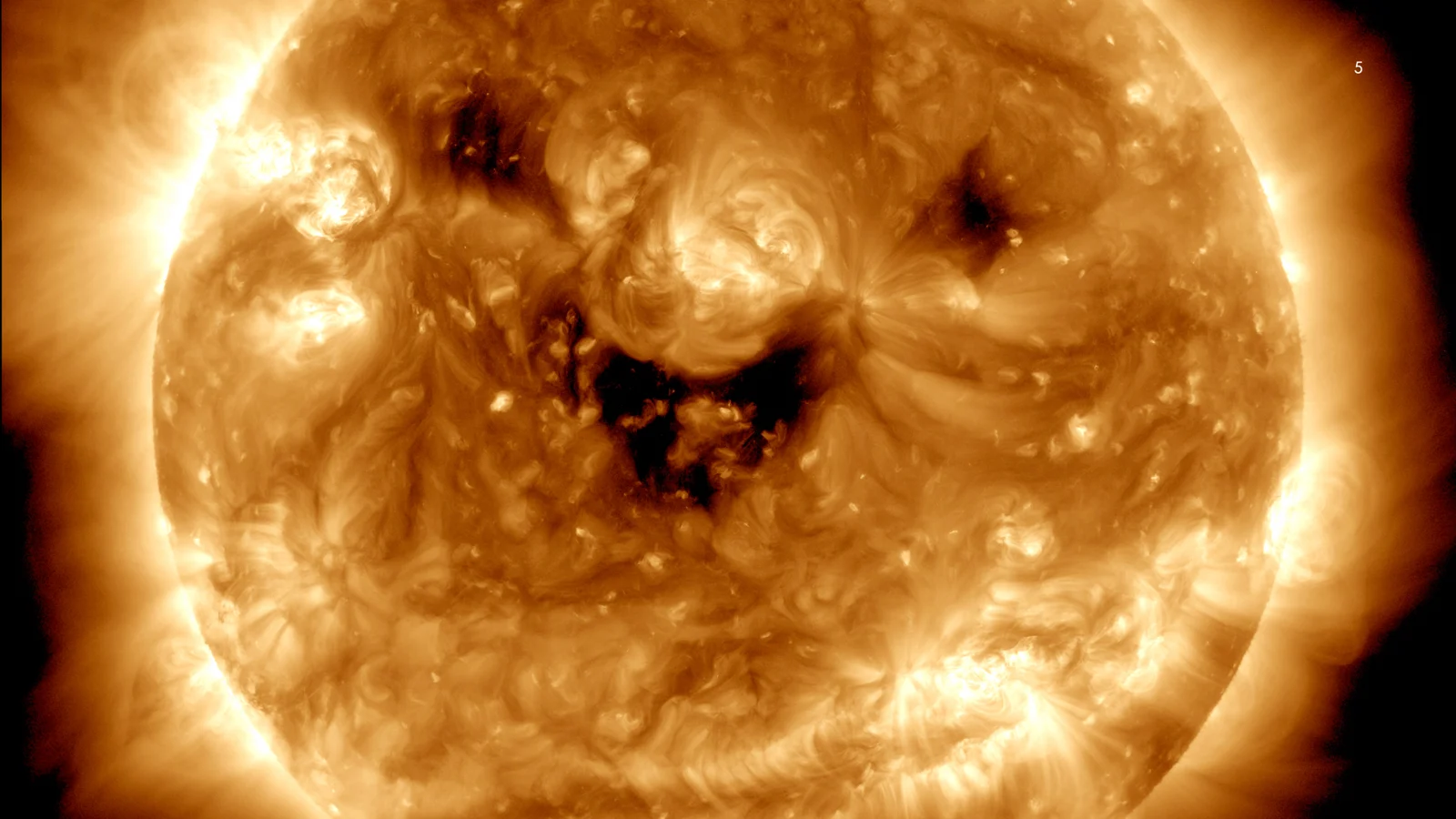
A long, dark coronal hole sits in the Sun’s western hemisphere, streaming high‑speed solar wind outward. The stream from this hole is predicted to reach Earth around 20 October, as the hole crosses the disk center. The solar wind speed is slightly elevated but is expected to normalize by the end of the day. The total interplanetary magnetic field remains calm, with a northward‑facing Bz component dominating.
Solar wind arrival and auroras
Because of the incoming solar wind, forecasters anticipate a G1 (minor) geomagnetic storm and auroras that could appear at high latitudes. The Kp index is expected to climb to 3–4 on 21 October as the coronal hole’s influence wanes. Auroras are likely confined to the polar regions, with occasional sightings possible from northern Scotland and southern New Zealand. The overall geomagnetic activity is expected to stay below storm thresholds.
Looking ahead, the probability of M‑class flares rises to 25 % for 20 October, while the chance of X‑class flares remains small. The main flare drivers remain the large beta‑gamma spot and the beta‑delta spot. As the coronal hole’s high‑speed stream passes, the solar wind conditions will settle, and the Sun’s activity will continue at low levels for the next few days.