


Seabirds help atoll islands as Earth flattens
Seabirds and native forests help atoll islands keep pace with rising seas as climate change reshapes the Earth.
22 Oct 2026 0 reads Compiled with AI
#Seabirds #Atoll islands #Climate change
Scientists have found that climate change is literally altering the shape of the planet. Satellite images show Earth a little flatter at the poles and rounder in the middle.
The flattening at the poles is part of the broader impact of warming on global geography. It accompanies rising sea levels that threaten low‑lying regions.
Seabird nutrients boost island growth
A study of 28 atoll islands in the Indian and Pacific oceans shows that seabird guano and native vegetation strengthen island resilience. Nutrients from bird droppings move from the open ocean to the land and back to the sea, boosting reef growth and sediment production.
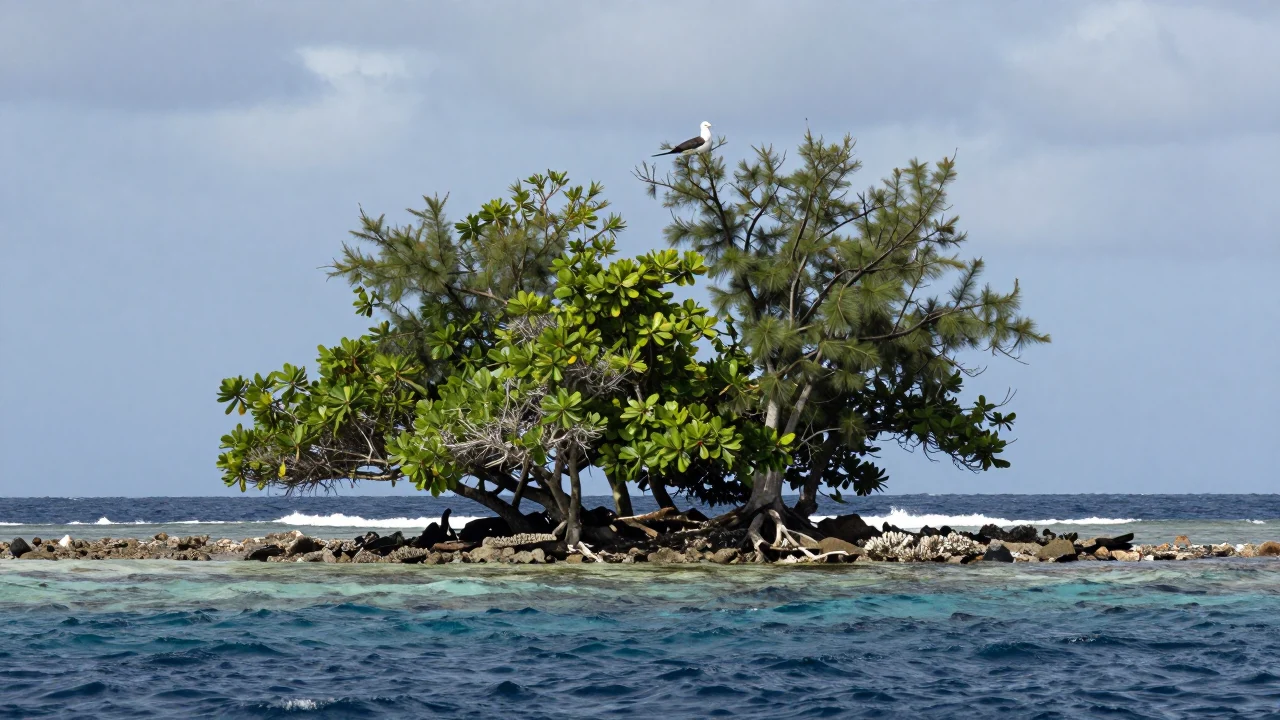
On rat‑free islands with abundant seabirds, reef accretion is 1.5 to 1.8 times faster than on rat‑infested islands. Sediment production is 2.3 to 2.8 times greater, and fine root networks in native forests are 4.6 times denser, helping to bind the island’s soil.
Removing invasive predators and planting native trees—an approach called rewilding—offers a nature‑based solution that can replace expensive engineering defenses. The study suggests rewilding could help islands keep pace with projected sea‑level rise under a 2 °C warming scenario until 2100.
The research highlights that low‑lying atoll islands, many only 1 to 3 m above sea level, experience sea‑level rise of about 3.5 cm per year, roughly double the long‑term average. While climate change continues to reshape the planet’s shape and raise sea levels, natural processes driven by seabirds and native vegetation can help protect and sustain these vulnerable islands.