

Photo credits
Saola search in Laos threatened by funding gaps
Researchers in the Annamite Mountains are racing to find the endangered saola before funding cuts force the search to stop.
21 Oct 2026 0 reads Compiled with AI
#Saola #Annamite Mountains #Conservation #Biodiversity #Laos #Wildlife
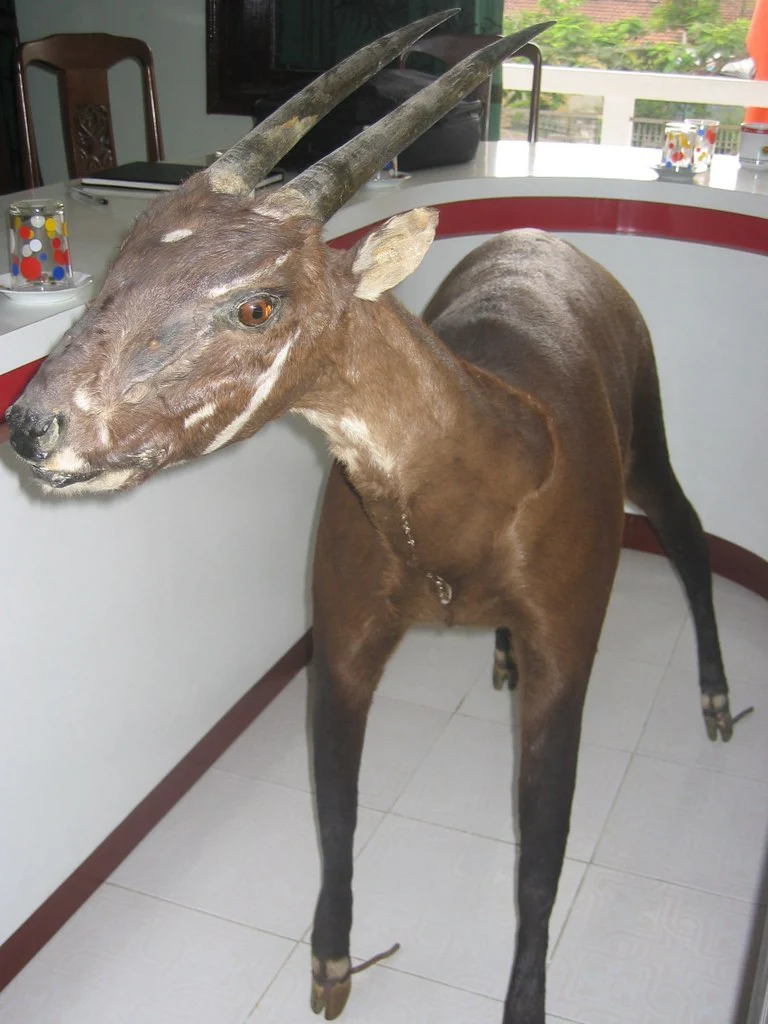
The saola, also called the Asian unicorn, is a tropical bovid that looks like an antelope but is its own species. Scientists first discovered it in 1992 in the Annamite Mountains that straddle Laos, Vietnam and Cambodia. The last confirmed sighting was a camera‑trap photo in 2013, and less than 50 individuals are believed to remain. Because no one has seen one alive for more than a decade, the saola may already be extinct, but that cannot be confirmed yet.
The Saola Foundation started a focused search in 2025, sending a team into 300 km² of forest in Laos’s Bolikhamxay province. The crew includes local trackers, sniffer dogs trained by Working Dogs for Conservation, and portable DNA‑testing kits that can identify saola dung in a few hours. The area was chosen because it has low hunting pressure and high numbers of related species such as the western serow and muntjac.
Field methods for locating a rare ungulate
Funding has become a major obstacle. The foundation’s October field month was postponed until new money arrived, largely from zoo donations. The organization is now raising money for every future month, warning that without continued support the search could stop altogether.
The biggest threat to the saola is hunting by snares, not habitat loss. Metal or wire snares kill many animals indiscriminately, and a few deaths could wipe out a species that may have only a handful of individuals left. The Annamite Mountains themselves are a global biodiversity hotspot, covering less than 0.2 % of Earth’s land but supporting more than 3 % of terrestrial vertebrate species, including many other rare mammals.
Why the Annamite Mountains matter for biodiversity
Conservationists argue that the last chance to secure the saola’s future is to locate them first and then consider captive breeding. The Saola Foundation maintains that even with low densities, advanced technology and local knowledge can still detect them. If the search stops, valuable data on the region’s other endemic species would also be lost, highlighting the broader impact of funding gaps.