

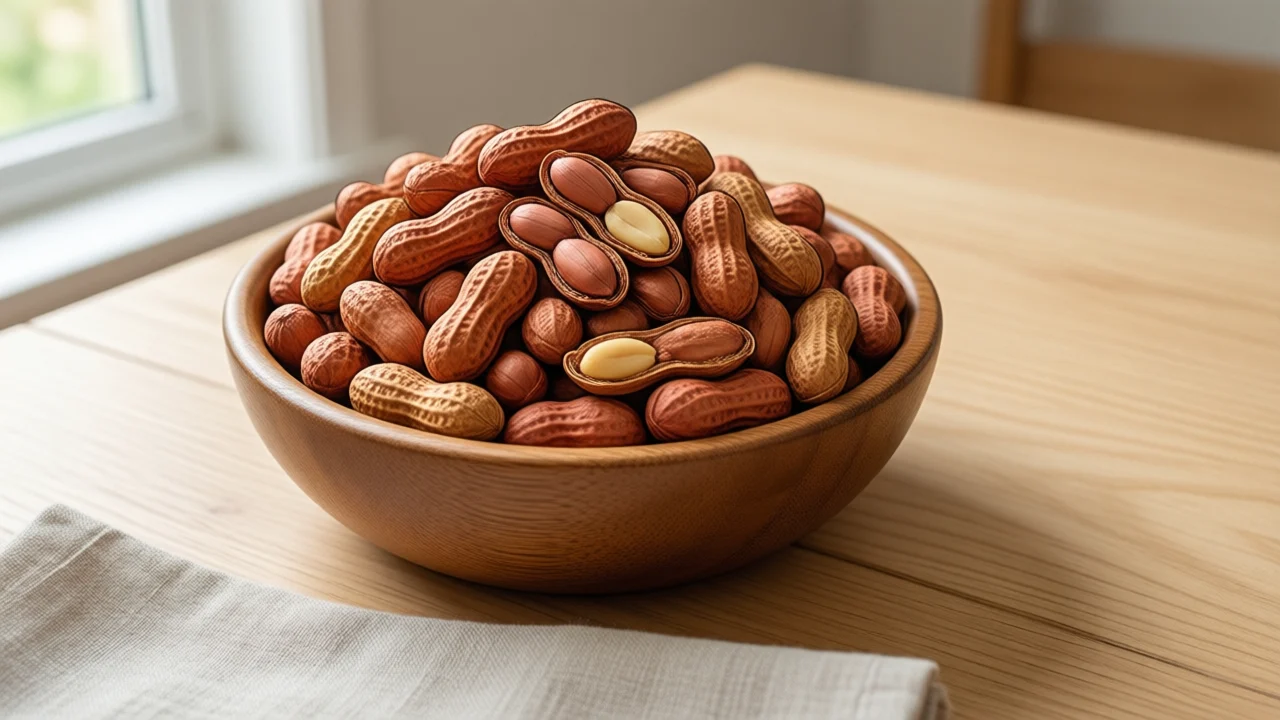
Peanuts daily may boost brain insulin response
Eating unsalted, skin‑roasted peanuts every day may help older adults’ brains respond better to insulin, a hormone linked to memory and Alzheimer’s disease.
2 Nov 2026 0 reads Compiled with AI
Researchers at Maastricht University Medical Center found that older adults who ate 60 grams of unsalted, skin‑roasted peanuts each day for 16 weeks had improved insulin responsiveness in parts of the brain that support memory. The study followed 31 healthy adults aged 60 to 75 and used a randomized, controlled crossover design, so each participant tried both the peanut and no‑peanut periods.
Insulin in the brain helps nerve cells grow, survive and communicate. As people age, the brain may become less responsive to insulin, which has been linked to age‑related cognitive decline. Healthy insulin signaling may also help protect against processes associated with Alzheimer’s disease. The peanut‑consumption phase produced stronger insulin responses in the lingual gyrus, hippocampus, parahippocampal gyrus and posterior cingulate gyrus, regions that play a key role in memory.
To measure these changes, scientists used arterial spin‑labeling magnetic‑resonance imaging. The technique tracks blood flow in specific brain areas after insulin is administered through the nose. The trial also recorded liver fat with abdominal MRI and assessed cognition with a computer‑based test battery.
The researchers suggest that several peanut components, including unsaturated fats, fiber, vitamins, minerals and L‑arginine, might all contribute to the brain benefits. L‑arginine is a precursor to nitric oxide, a molecule that has been reported to facilitate learning and memory. The study was funded by the Peanut Institute Foundation, which had no role in the design or interpretation of the results.