

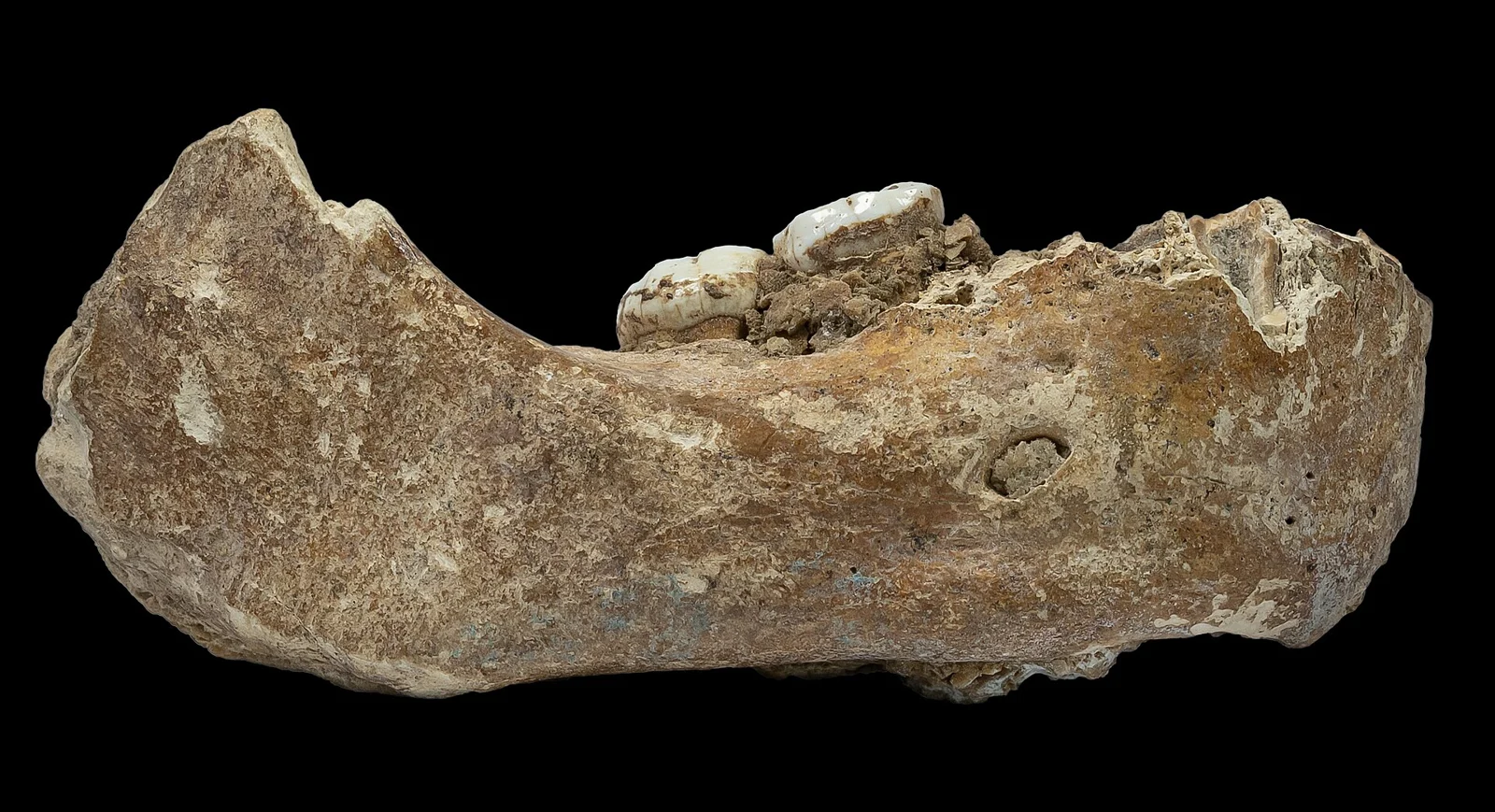
New proteins paint face of ancient Denisovans
Scientists used ancient proteins to identify more Denisovan fossils and outline their distinctive faces.
24 Oct 2026 0 reads Compiled with AI
A new study has used ancient proteins from fossils found in China to identify more Denisovan remains and to sketch a detailed picture of their faces, showing massive brow ridges, sloping foreheads, and broad, relatively flat faces.
Protein evidence ties fragments to Denisovans
Protein evidence ties fragments to Denisovans. Archaeologists excavated 20 human fossil specimens at Xujiayao in northern China between 1976 and 1979. The roughly 199,000–138,000-year-old remains had disputed places on the human family tree. DNA was not preserved, but the researchers recovered 18 ancient proteins from two fossils. A distinctive collagen variant found in both fossils had been seen in confirmed Denisovans, and a separate analysis of protein sequences also grouped the Xujiayao remains with them.
A face emerges. When combined with the nearly complete Harbin skull, nicknamed “Dragon Man” and previously called Homo longi, the fossils reveal a long, low skull, heavy brow ridges, a backward‑sloping forehead, broad flat faces, wide nasal openings, and thick skull bones. These traits share elements with Neanderthals, Homo erectus, and modern humans.
A face emerges
Earlier, many Asian fossils had been classified separately as early modern humans or other Neanderthal relatives. The protein‑based comparison argues that differences in skull size and shape may not be enough to separate them into new species, suggesting a varied Denisovan lineage spread across Siberia, the Tibetan Plateau, northeastern China and as far south as the Taiwan Strait. The authors stress that the question is far from settled and that the conclusion is stronger for specimens identified through proteins or DNA than for those linked only by resemblance.
Denisovans interbred with modern humans, leaving DNA in populations in Oceania and parts of Asia. One Denisovan‑related gene variant helps some Tibetans cope with low‑oxygen high‑altitude environments. The study, published in Nature, suggests that Denisovans were not confined to a Siberian cave but were a widespread part of human history.