

Photo credits
New CAR T‑cell therapy shows early promise for relapsed B‑cell cancers
A first‑in‑human study of a trispecific CAR T‑cell therapy that also uses OX‑40 shows encouraging results in patients with relapsed B‑cell blood cancers.
15 Oct 2026 1 read Compiled with AI
#Ohio State University #CAR T‑cell therapy #B‑cell cancers
A first‑in‑human clinical trial led by the Ohio State University Comprehensive Cancer Center tested a new CAR T‑cell therapy in patients with relapsed or treatment‑resistant B‑cell blood cancers. The therapy targets three proteins on cancer cells—CD19, CD20 and CD22—and adds the protein OX‑40 to boost the immune response. The study, published in Blood Cancer Discovery, sought to determine whether this enhanced approach could improve outcomes for patients with limited options after standard treatments fail.
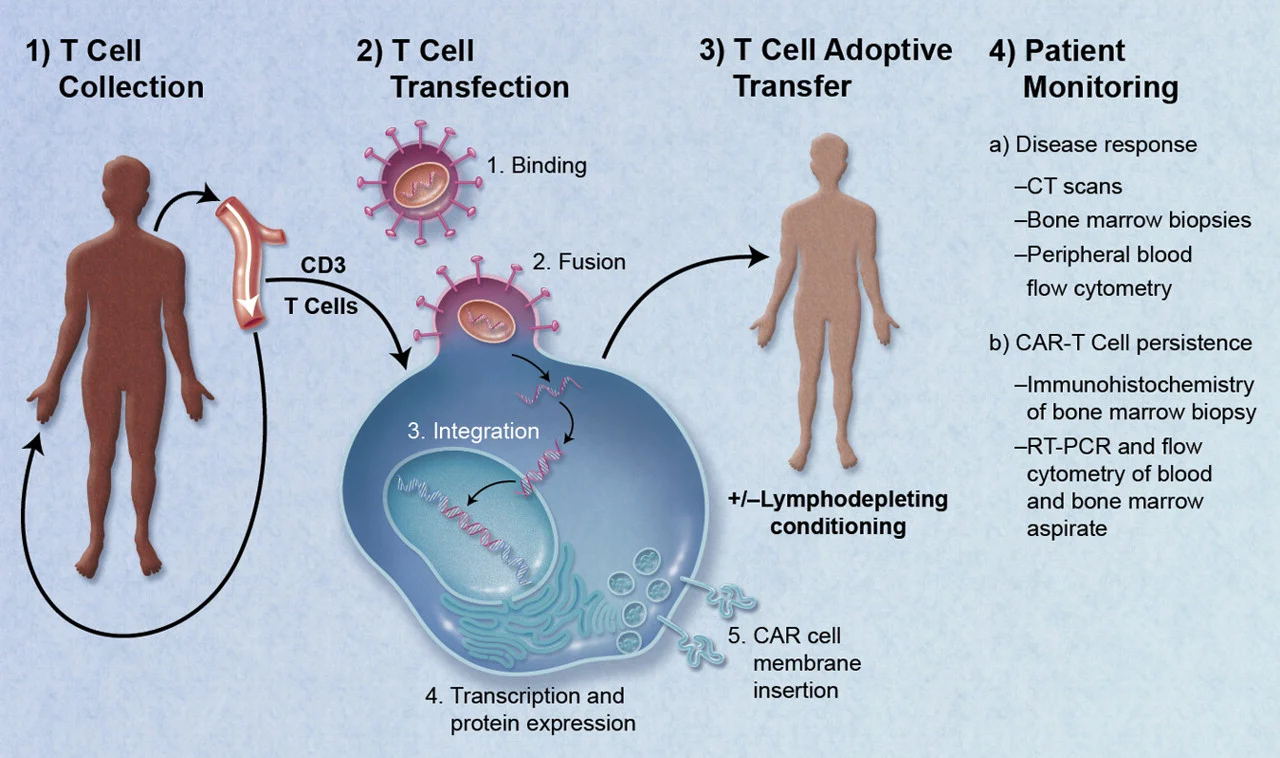
CAR T‑cell therapy works by taking a patient’s own T cells, engineering them in a laboratory to better recognize and kill cancer cells, and then infusing them back into the body. In this trial, the cells were engineered to attack the three proteins common on B‑cell cancer cells, and the addition of OX‑40—a protein that enhances T‑cell activity—was a first in a clinical setting. Manufacturing was accelerated, with the cells prepared and infused within six days, allowing fresh cell infusions that may reduce complications.
Eighteen patients, with a median age of 64, participated in the trial. Most had already tried a median of three different therapies before receiving the new cell product, and 16 received the OX‑40‑enhanced cells. The results were encouraging: patients with B‑cell non‑Hodgkin lymphoma showed meaningful clinical activity with minimal side effects, and remission was observed in mantle cell lymphoma, follicular lymphoma and diffuse large B‑cell lymphoma.
While the early outcomes are promising, the investigators note that larger studies are needed to confirm the safety and effectiveness of this enhanced approach.