

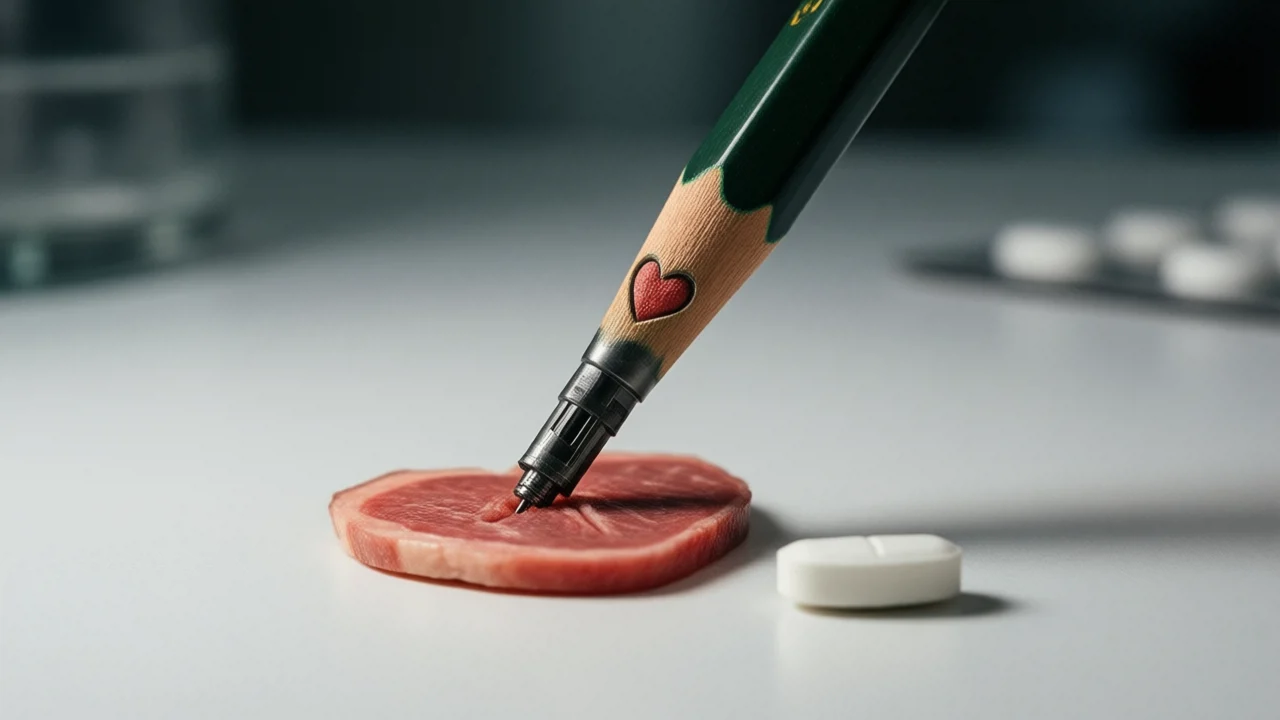
Microscale robots could treat heart infections without surgery
Pencil‑tipped robots can deliver antibiotics straight to heart infections, offering a less risky alternative to open‑heart surgery.
24 Oct 2026 0 reads Compiled with AI
#tiny robots #heart infections
Heart infections, called endocarditis, affect about 50,000 people in the United States each year. The usual treatment is a weeks-long course of antibiotics given through a vein, but the drugs are often too diluted by the time they reach the heart. Doctors are then left with a tough choice: either give higher doses, which can be toxic, or perform risky open‑heart surgery. A new team from Johns Hopkins University has built a solution that could spare patients from both.
How the robots work
The new solution is a pair of robots the size of a pencil tip. One robot, called the needle module, latches onto the infected area of the heart and acts as a docking station. The second robot, the drug module, carries antibiotics and is steered by magnetic fields from outside the body. The robots have no batteries or motors.
The robots are guided by an external electromagnetic coil system that works like an MRI machine, so the robot moves precisely inside the beating heart. Using two small robots instead of one larger one also allows the device to reach tight spots in the body. Because the needle can stay docked while the drug module is replaced, several doses can be delivered if needed.
Future applications
In experiments on realistic heart models and on real pig heart tissue, the robots moved smoothly and autonomously, even against simulated blood flow. The team reported that a full treatment might take about ten minutes, compared with the four to six weeks of intravenous therapy usually needed. The study was published in Advanced Materials Technologies and was supported by the National Science Foundation’s robotics program.
Beyond heart infections, the researchers see possibilities for treating cancer, where it is spreading, and other hard‑to‑reach diseases. The next step is to test the robots in more realistic heart models with muscle contraction and the beating movement of a real heart.