

Margaret Hamilton, Whose Apollo Flight Code Guided Moon Landings, Has Died At 90
The computer scientist led the team behind the Apollo guidance system and established key practices for dependable software.
9 Oct 2026
Margaret Hamilton has died at age 90. She directed the team that created onboard flight software for NASA's Apollo missions and helped establish software engineering as an independent technical discipline.
Born in Indiana in 1936, Hamilton earned a mathematics degree with a philosophy minor from Earlham College. She began programming at the Massachusetts Institute of Technology in a weather simulation laboratory. Early computers were rare at the time, and she learned on the job, even fixing paper tapes by hand with tape and a hole punch.
In 1961, Hamilton joined a military air defense project at MIT that analyzed radar data to spot unknown aircraft. Her early assignment involved fixing code that printed its results in Latin and Greek. Solving that puzzle sparked her focus on building systems that could recover from sudden mistakes.
By 1965, Hamilton joined the MIT Instrumentation Laboratory to write flight control programs for NASA's lunar expeditions. She was the first programmer and first woman hired for that project, ultimately managing software across six crewed missions.
In that era, programs were hard-wired into physical cables. Factory textile workers wove copper wires through tiny magnetic rings to store binary ones and zeros. Hamilton was responsible for checking those strands, earning her the lab nickname of rope mother.
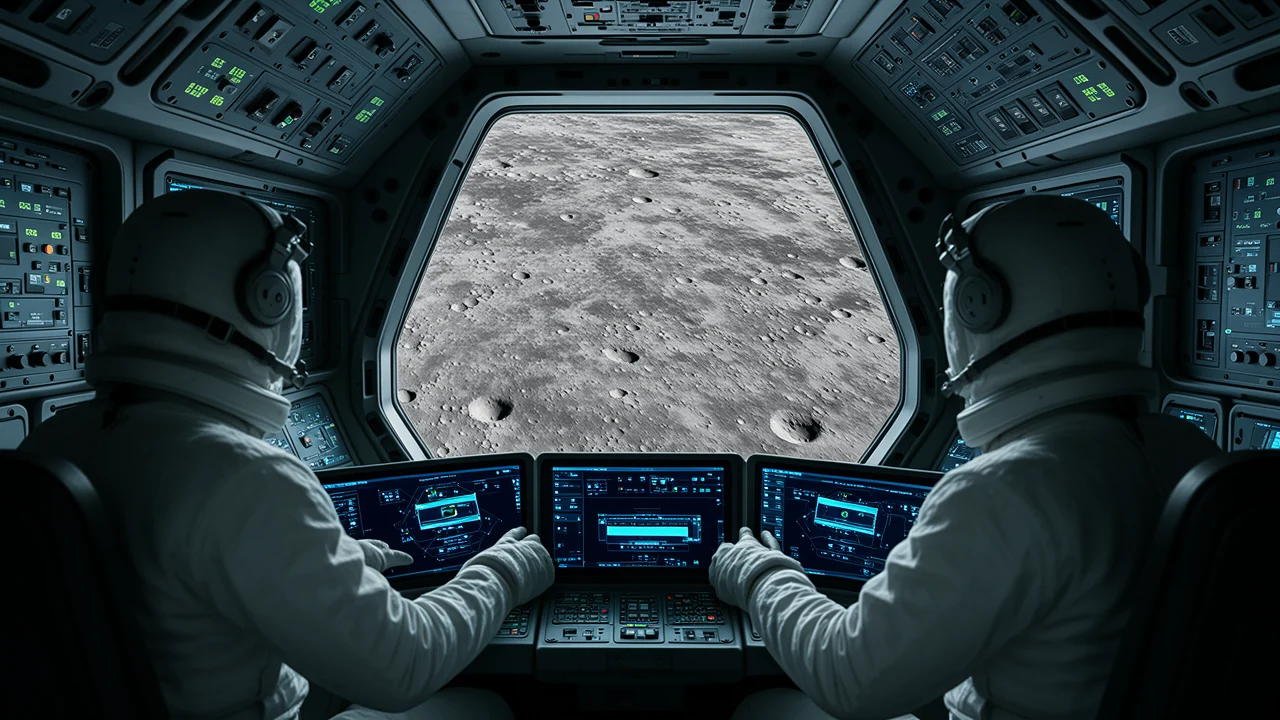
An accidental discovery led to an important software safeguard. Hamilton often brought her young daughter to the lab, where the girl typed a pre-launch code into a simulator that crashed the program. NASA managers initially dismissed the risk, but they added safeguards after astronaut Jim Lovell made the exact same mistake while orbiting the Moon during Apollo 8.
Hamilton also designed routines to protect computers from task overloads. If too many demands arrived at the same moment, the software put aside lower-priority jobs to ensure vital flight calculations never stopped.
That safety design saved the Apollo 11 lunar landing in 1969. As the lunar module dropped toward the Moon, radar equipment flooded the computer with excess data and triggered system alarms. Hamilton's software ignored the extra tasks and kept the descent thrusters running, allowing the crew to touch down safely.
After the lunar program ended, Hamilton worked at the Draper Laboratory until 1976. She then founded two software businesses, Higher Order Software and Hamilton Technologies, focusing on methods that eliminated software bugs before programs ran.
Over her career, Hamilton authored more than 130 technical publications and received the Presidential Medal of Freedom in 2016. She is survived by her daughter, two grandsons, and four great-grandchildren.