
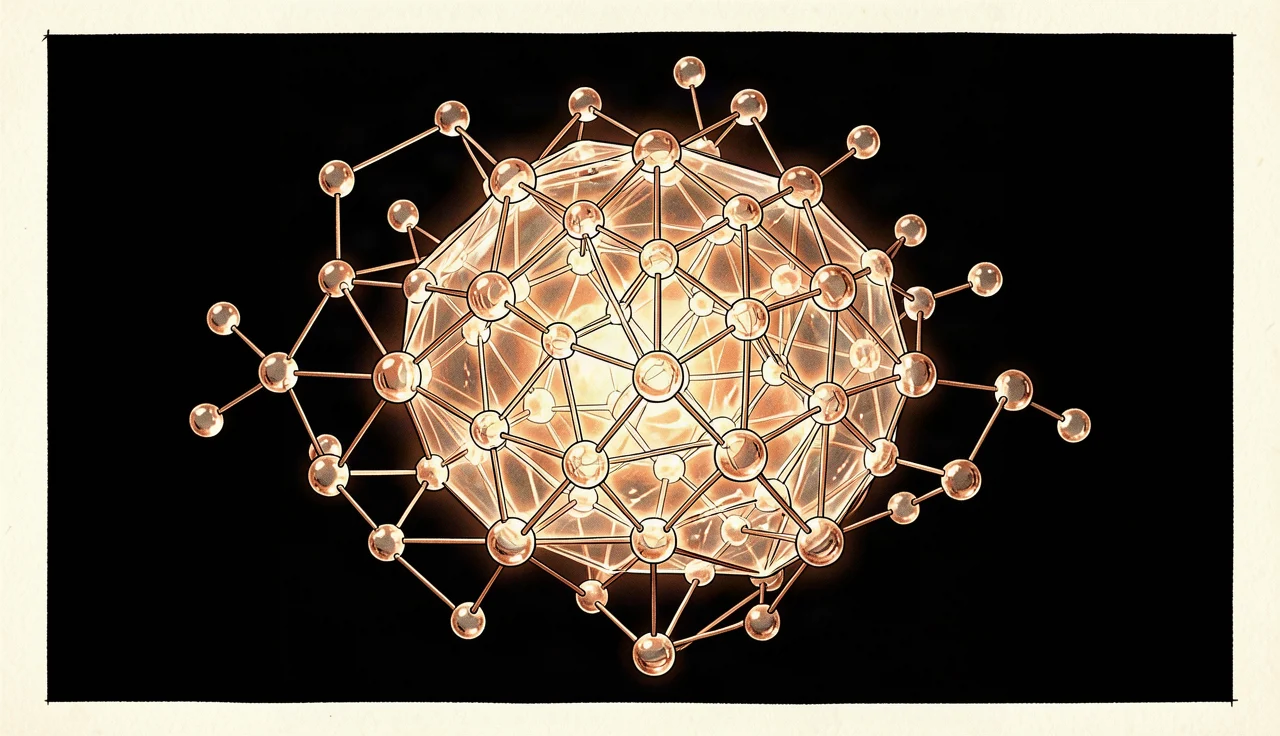
Laboratory Experiments Reveal a New Form of Ice Found at Crushing Pressures
Compressing water between diamonds under extreme heat shows how oxygen atoms assemble deep inside giant planets.
7 Oct 2026
Observing the inner layers of distant celestial bodies like Neptune and Uranus remains impossible through direct sampling. Planetary researchers must rely on surface measurements and orbital scans, using indirect calculations to estimate what lies hidden thousands of kilometers beneath thick clouds.
These remote worlds are categorized as ice giants because substantial portions of their mass consist of rocky debris and compressed volatile compounds. Exactly how water behaves under the unrelenting gravitational weight at their deep centers has remained an open question.
In an investigation published in Physical Review Letters, a research team led by Alexis Forestier explored the structural transformations of water subjected to forces similar to those found within planetary depths.
On Earth, frozen water organizes into familiar crystal arrangements, but extreme compression forces molecules into entirely different configurations. Beyond roughly 80 gigapascals, water shifts into ice X, where oxygen atoms establish a body-centered cubic layout.
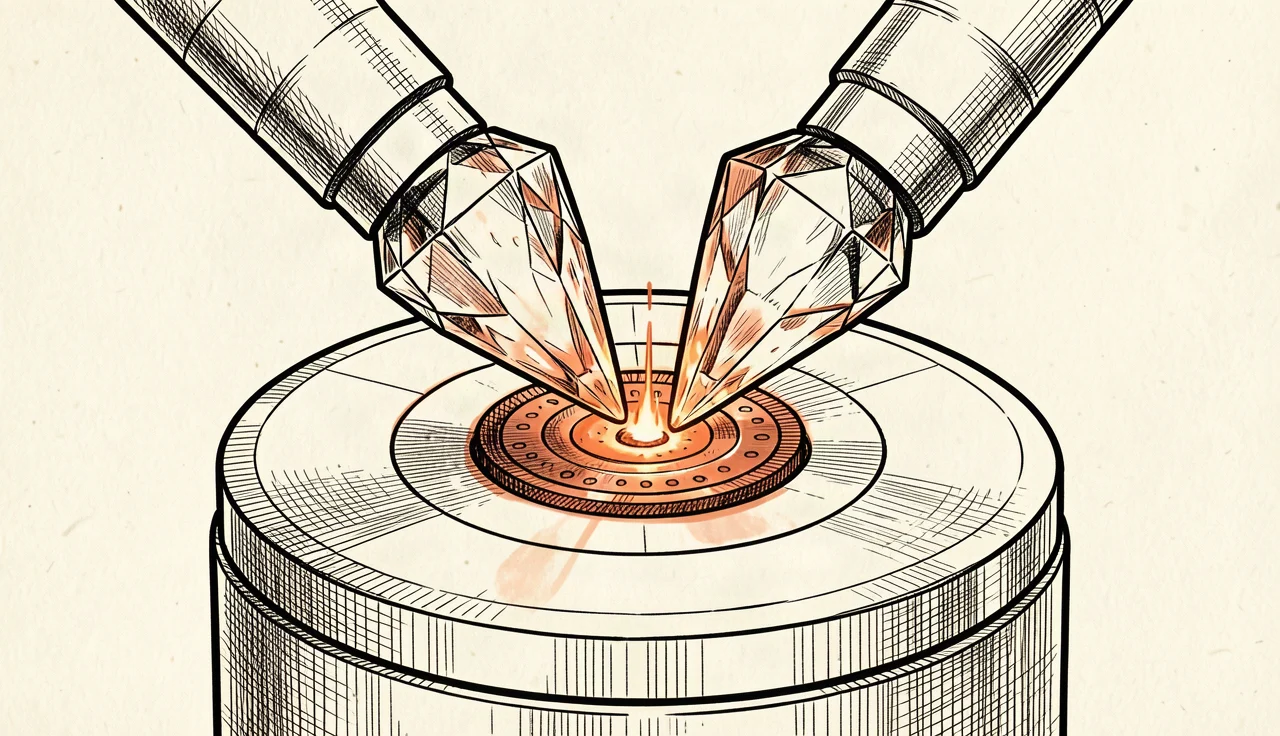
To push past previously verified phases, the experimenters trapped water inside a diamond anvil cell. Squeezing the sample between the diamond tips reproduced immense pressure, while focused laser beams drove temperatures upward to match planetary conditions.
Probing the sample required synchrotron X-ray diffraction, a technique that tracks how high-energy radiation scatters off atomic structures. This method allowed the group to identify the precise geometric arrangements of oxygen atoms inside the pressurized cell.
At conditions reaching around 2,000 Kelvin and surpassing 200 gigapascals, the team recorded the emergence of hexagonal close-packed ice, along with an intermediate state blending hexagonal and face-centered cubic arrangements at transitional thresholds.
The results do not provide a complete accounting of what sits at the cores of Neptune and Uranus, particularly since those planetary interiors contain minerals and other chemicals alongside water. Even so, identifying the hexagonal close-packed structure gives modelers concrete physical data when simulating the interiors of giant planets.