

New 3D cloak makes objects invisible to heat cameras
A new device can guide heat around objects, making them almost invisible to infrared cameras.
24 Oct 2026 0 reads Compiled with AI
Engineers at the University of Illinois Urbana-Champaign and the Technical University of Denmark have built a 3D cloak that can hide an object's heat signature from infrared cameras. It is made of a lattice of tiny aluminum bars wrapped in a rubber-like material called polydimethylsiloxane. The cloak works by guiding heat around the hidden object, so the temperature pattern nearby stays nearly the same. It cannot hide a person, though, because a human body keeps making its own heat.
How the cloak guides heat
The team used a 3D printer to make the aluminum frame, then poured the rubber material into the gaps. By changing the thickness and direction of the metal bars in all three directions, they could control where heat would go. They used mathematical models to work out the properties the cloak needed. Then they turned those numbers into a continuous structure that could be printed.
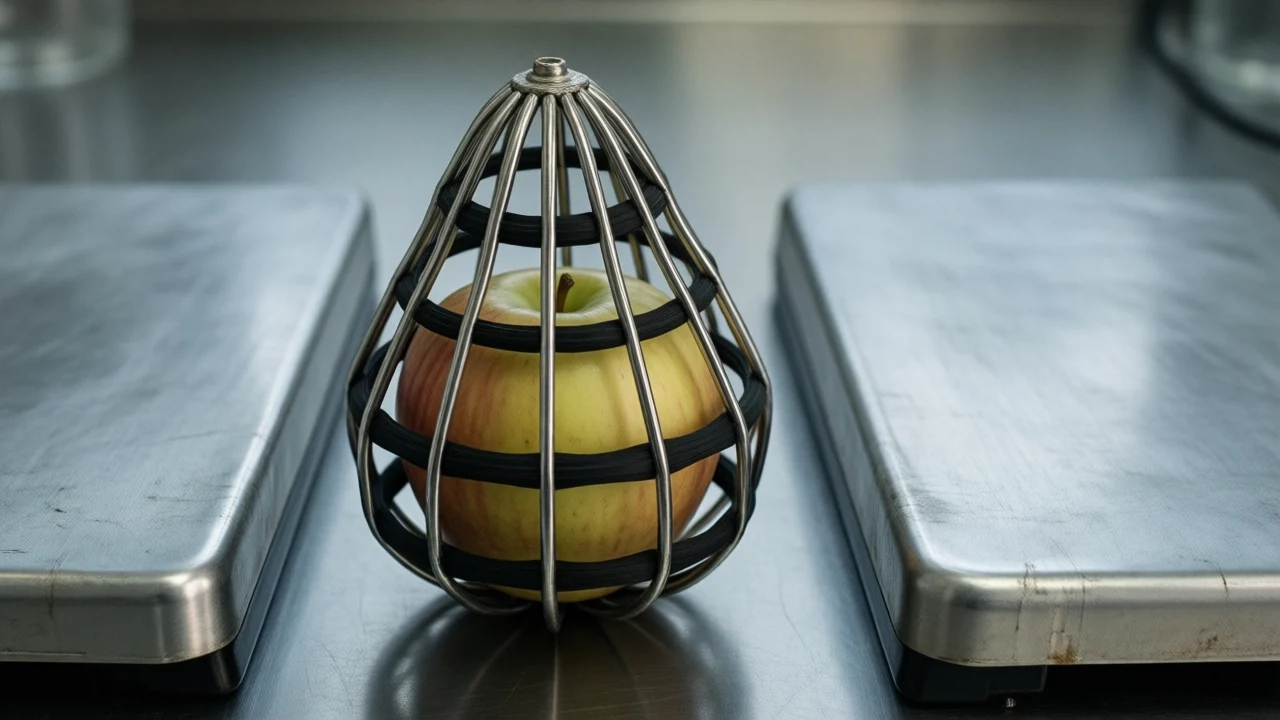
To test the design, the scientists put an apple-shaped core inside a pear-shaped shell. They set the whole assembly between two aluminum plates. One plate was heated to 40 °C, and the other was cooled with ice-water. After an hour, an infrared camera showed that the temperature bands outside the cloak stayed almost straight, as if the core were not there. Very little heat crossed the protected area inside. The researchers also made a heart-shaped cloak and ran computer simulations to hide a face-shaped object. They did not build a physical test for the face shape.
The cloak redirects heat that flows through solid materials, so it cannot hide an object that makes its own heat, such as a person. Even so, the work suggests that future devices could route heat around delicate electronics or keep parts at a steady temperature in harsh settings. Shelly Zhang, an engineering professor at Illinois, said that any field needing precise control of heat, or wanting to protect something from thermal detection, could benefit.