

Domestic Rocket Engine Testing Grounds Begin Construction Outside London in Ontario
A thirty million dollar facility will give Canadian engineers a domestic site to fire high-thrust orbital propulsion systems.
7 Oct 2026
Work has begun on an industrial site outside London, Ontario, designed to host Canada Rocket Company's static trials for orbital propulsion systems. The development marks an attempt to establish domestic testing infrastructure capable of handling high-thrust engines, filling a gap that previously forced Canadian space initiatives to conduct critical trials abroad.
The installation occupies fifty acres leased from the Greater London International Airport Authority. Plans call for a twelve-thousand-square-foot workshop and engineering building alongside dedicated horizontal and vertical test stands. These pads are being built to withstand propulsion systems generating more than one meganewton of mechanical thrust.
Until now, any Canadian enterprise designing rocket motors of this magnitude had to ship hardware to foreign facilities in countries such as the United States, France, Germany, or Japan. Securing access to domestic firing stands allows propulsion teams to evaluate hardware without navigating cross-border logistics or waiting on foreign schedule availability.
Canada Rocket Company is investing thirty million Canadian dollars into the location, which it named after astronaut Jeremy Hansen. Operational readiness is scheduled for 2028, with preliminary component validations planned for late 2026.
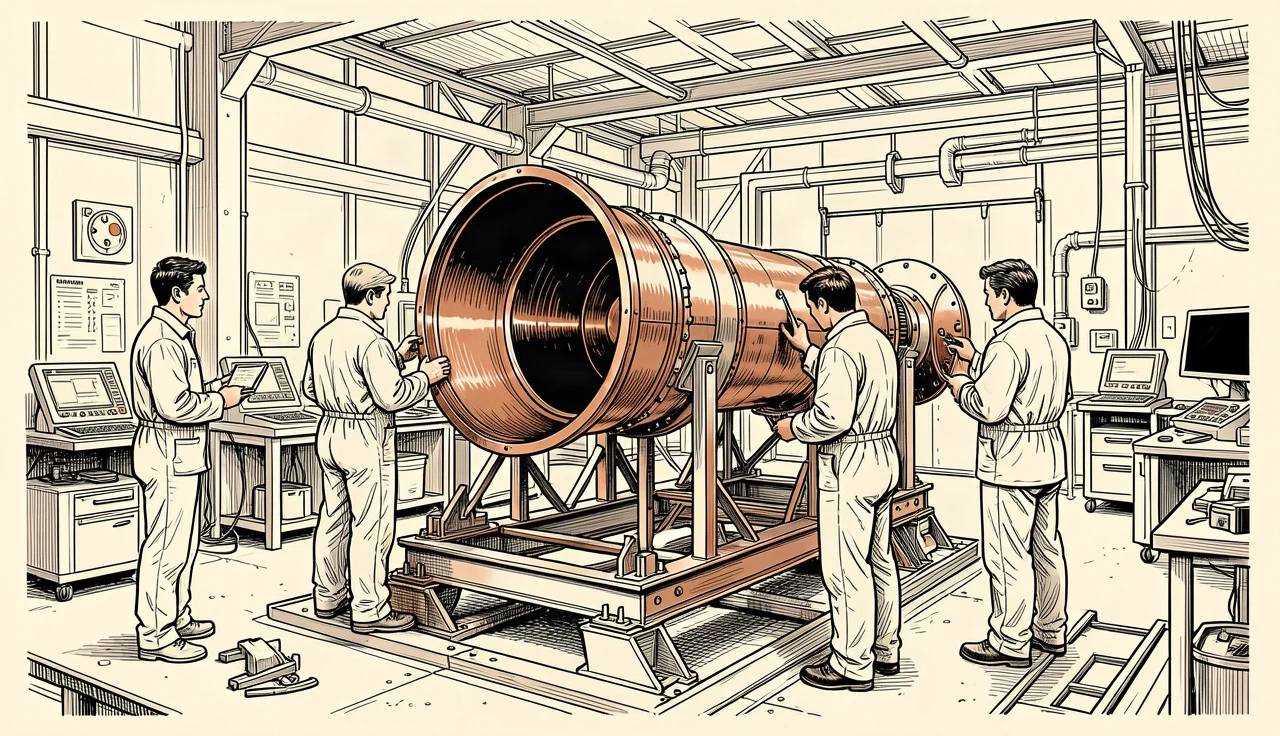
The ultimate goal behind the proving ground is the construction of a reusable, medium-lift launch vehicle capable of carrying twelve thousand kilograms into low-Earth orbit. That cargo rating targets satellite constellations and aligns closely with the lift capacity of commercial providers like SpaceX's Falcon 9.
Southwestern Ontario already houses a cluster of roughly forty aerospace and defence contractors. The new proving grounds will add forty technical roles over the next eighteen months, supported by workforce and training ties with Fanshawe College and Western University.
National interest in sovereign space infrastructure has grown as communication, weather tracking, and national security rely more heavily on dedicated satellites. As geopolitical tensions and trade pressures have shifted, Canadian defence and technology planners have placed greater emphasis on retaining domestic orbital access.
Founded late last year, the company operates an engineering laboratory in Toronto where staff develop parts for engines running on methane and liquid oxygen. Having gathered approximately twenty-two and a half million Canadian dollars in initial funding, the firm aims to build out full manufacturing operations over the coming years as engine testing expands.