

Comets unlikely to have seeded Earth with life
Hydrogen cyanide, a key building block of life, rarely survived a comet strike, and Mars may have fared better than Earth.
30 Oct 2026 0 reads Compiled with AI
Scientists at the University of Cambridge used computer models to ask whether comets could have brought the molecules that start life to Earth. The team, led by Richard Anslow, published its results in Scientific Reports on 28 October 2026. The study ran 100,000 simulations that recreated the conditions of the early Earth’s comet bombardment. The models combined comet populations and orbits with atmospheric entry and impact physics to test whether organic molecules could survive the trip to the surface. The paper concludes that the odds of a comet delivering life-building chemicals were extremely low.
Why comets fall short
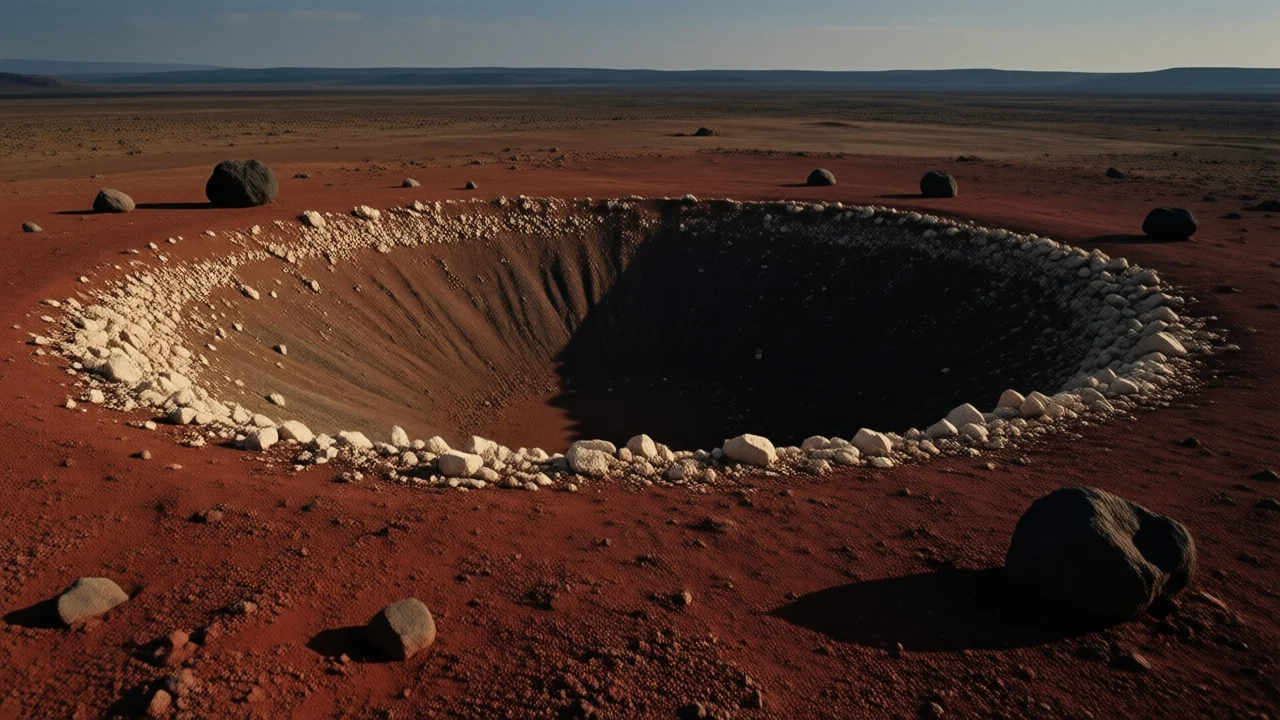
The researchers focused on hydrogen cyanide, a key prebiotic molecule found in many comets. Only a comet larger than about 100 metres, moving slowly and striking at an oblique angle, could keep enough of it intact. Even then, the comet would need to hit land rather than an ocean, because water would dilute the molecules too quickly. On average, the simulations suggest that only one such impact would have occurred over more than a billion years. Anslow describes it as a one-in-a-million occurrence.
When the same models were applied to Mars, the results changed. Mars’s thinner atmosphere and lower escape velocity mean comets hit at slower speeds, so more molecules survive. The study estimates that Mars would receive over five times as many successful deliveries as Earth. Venus’s dense atmosphere, by contrast, would likely destroy most comets before they reach the surface. That makes Mars a more promising target for cometary seeding, even though it probably never hosted life.
Other planets and sources
The Cambridge study does not rule out every route by which space could have delivered life’s ingredients, but it makes a cometary origin much less likely for Earth. Other scientists point to carbonaceous asteroids, volcanic vents and hydrothermal systems as possible sources. Because a successful comet impact was so rare, the researchers say it would have been a one-off event at best. They suggest future searches for life could consider other planetary systems where such a delivery would be more likely.