

Caltech models Kondo effect; INRS shows pseudogap competes
Advanced calculations let Caltech and Yale predict the Kondo effect accurately, while INRS experiments show the pseudogap competes with superconductivity in cuprates.
23 Oct 2026 0 reads Compiled with AI
#Kondo effect #Caltech #INRS #pseudogap
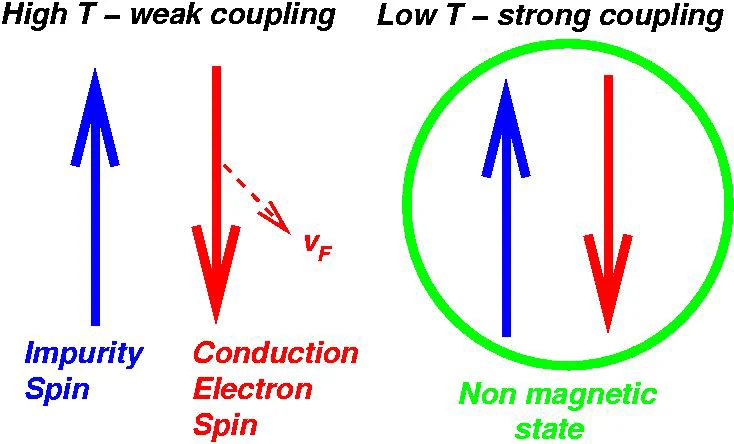
Caltech and Yale researchers used an ab initio approach to model a single magnetic atom as if it were a larger molecule. By repeating quantum‑physics calculations, they predicted how the Kondo effect would change electrical resistance at low temperatures. Their predictions matched lab measurements with an accuracy up to one hundred times better than simplified models. The study, published in Science, shows that complex electron interactions can now be predicted purely from theory. The new method could be expanded to study more elaborate materials, including high‑temperature superconductors.
A team at INRS in Quebec used a pulse of light to temporarily suppress superconductivity in a cuprate crystal. With time‑resolved photoemission spectroscopy, they saw a light‑induced pseudogap emerge when superconductivity disappeared and fade as it returned. The finding demonstrates that the pseudogap competes with superconductivity rather than supporting it. The work, published in Nature Physics, gives new insight into the mysterious pseudogap state that has long puzzled scientists. Understanding this rivalry may help in designing future superconductors and quantum devices.