

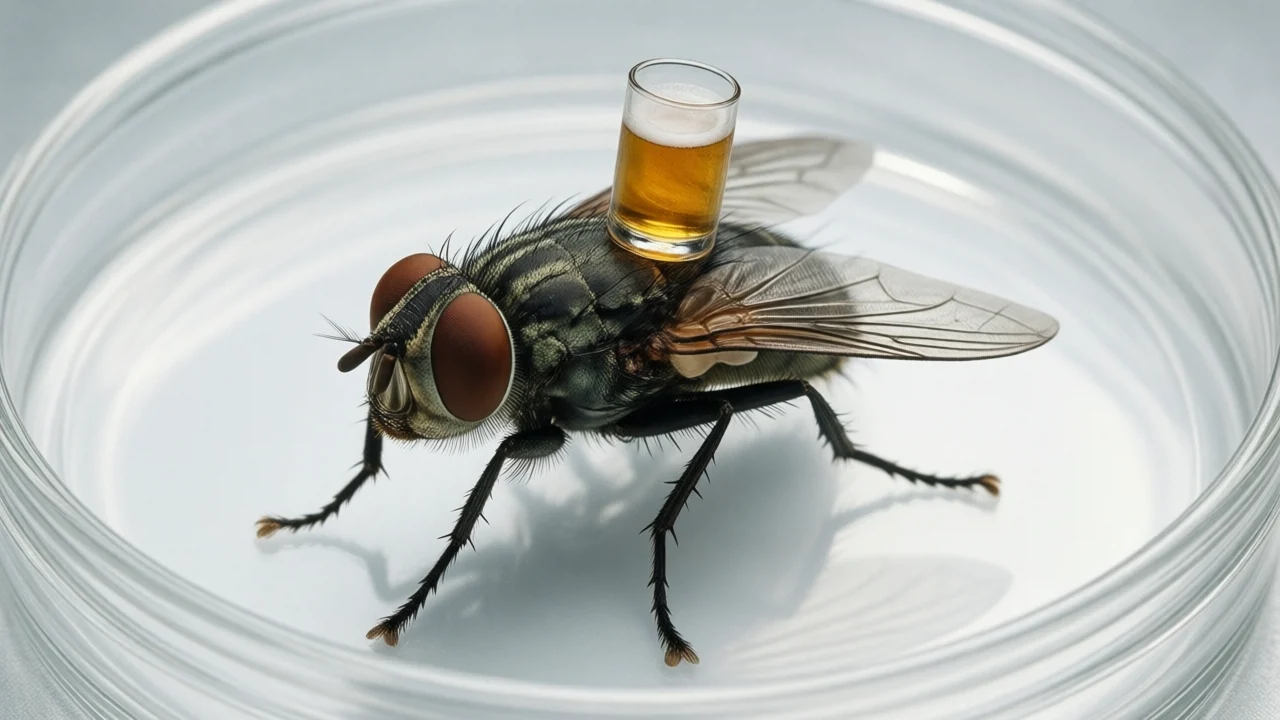
Brain hunger signals link to alcohol craving, study finds
Researchers in a fruit fly model show that hunger activates a neurotransmitter that influences whether alcohol is remembered as rewarding, offering clues for addiction treatment.
24 Oct 2026 0 reads Compiled with AI
#octopamine #fruit fly #Brown University
Scientists at Brown University’s Carney Institute used fruit flies to map neurons that respond when the animals are food‑deprived. They found that hunger activates neurons that contain octopamine, a neurotransmitter similar to human norepinephrine, and that this activation influences how the flies remember alcohol as a reward.
Neurons that link hunger and reward
The team also genetically silenced or activated a single octopamine neuron, called VUMa3, and observed that the change in alcohol preference occurred only when the flies were hungry. The result suggests a link between a hunger signal and the brain’s reward circuitry.
The researchers suggest that hunger can recruit new neurons to communicate with circuits that link environmental cues to the feeling of reward. They used the example of a bar sign that might only attract a hungry person, illustrating how internal states can shape craving. The work could help scientists understand how external stressors, such as food insecurity, influence reward systems involved in alcohol addiction.
The work, funded by the National Institute on Alcohol Abuse and Alcoholism, the National Institute of Neurological Disorders and Stroke, the National Institute of General Medical Sciences, the National Institute on Aging, the National Institute on Deafness and Other Communication Disorders, the Hubert & Richard Hanlon Trust, the Howard Hughes Medical Institute and the Carney Institute, adds to research that looks beyond classic reward molecules like dopamine. By highlighting the role of hunger and other internal states, the study offers hints for preventing relapse and treating addiction.