

Brain cancer cells adapt to thick fluid
Prolonged exposure to viscous fluid changes glioblastoma cells' physical properties.
21 Oct 2026 0 reads Compiled with AI
#Glioblastoma #Chongqing University #Microsystems & Nanoengineering #YAP
Researchers at Chongqing General Hospital and Chongqing University found that glioblastoma cells keep a mechanical memory when exposed to thick fluid. The study shows that after a month in a viscous environment, the cancer cells become smaller, more deformable, and better able to squeeze through narrow spaces. This adaptation may affect how they navigate surrounding tissue.
Design of the microfluidic chip
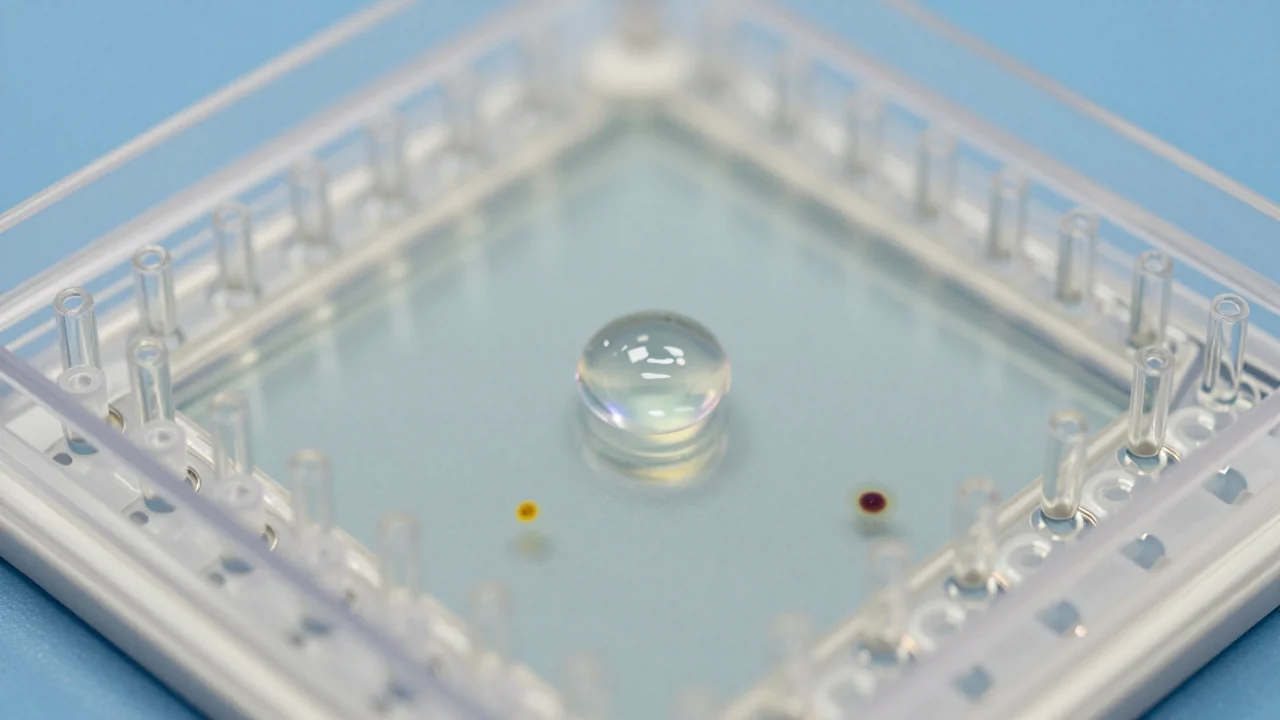
The team used an open microfluidic chip that contains a removable cap and a ring of microscopic pillars. The chip allows cells to move in a fluid with a viscosity similar to that found at a tumor’s edge and lets scientists observe nuclear shape changes in real time. The chip can maintain cultures for up to a month, which is longer than most closed‑device studies.
Under the thick fluid, both U‑251 and LN‑229 glioblastoma lines adapted by moving faster and farther through the chip. Microscopy revealed that their nuclei were compressed when squeezing past pillars, and a protein called YAP accumulated inside the nucleus. YAP’s presence signals that the cells are responding to mechanical stress by altering gene activity.
While the two cell lines gained similar physical traits, their molecular responses were different. U‑251 cells showed signs of a mesenchymal transition and increased activity in genes linked to invasion. LN‑229 cells did not exhibit major lasting changes in gene expression, but some protein changes remained after returning to normal fluid.
The findings suggest that fluid viscosity can shape the invasive properties of glioblastoma cells, offering a potential new target for therapy. The chip also provides a platform for testing drugs that affect YAP signaling or the cell’s mechanical structure under realistic conditions. Researchers plan to use it to explore how mechanical cues influence tumor spread.