
Boston Dynamics Names Former Amazon Voice Chief Rohit Prasad as Its Next Leader
The maker of Atlas turns to an artificial intelligence veteran to steer its push into mass-producing humanoid robots.
8 Oct 2026
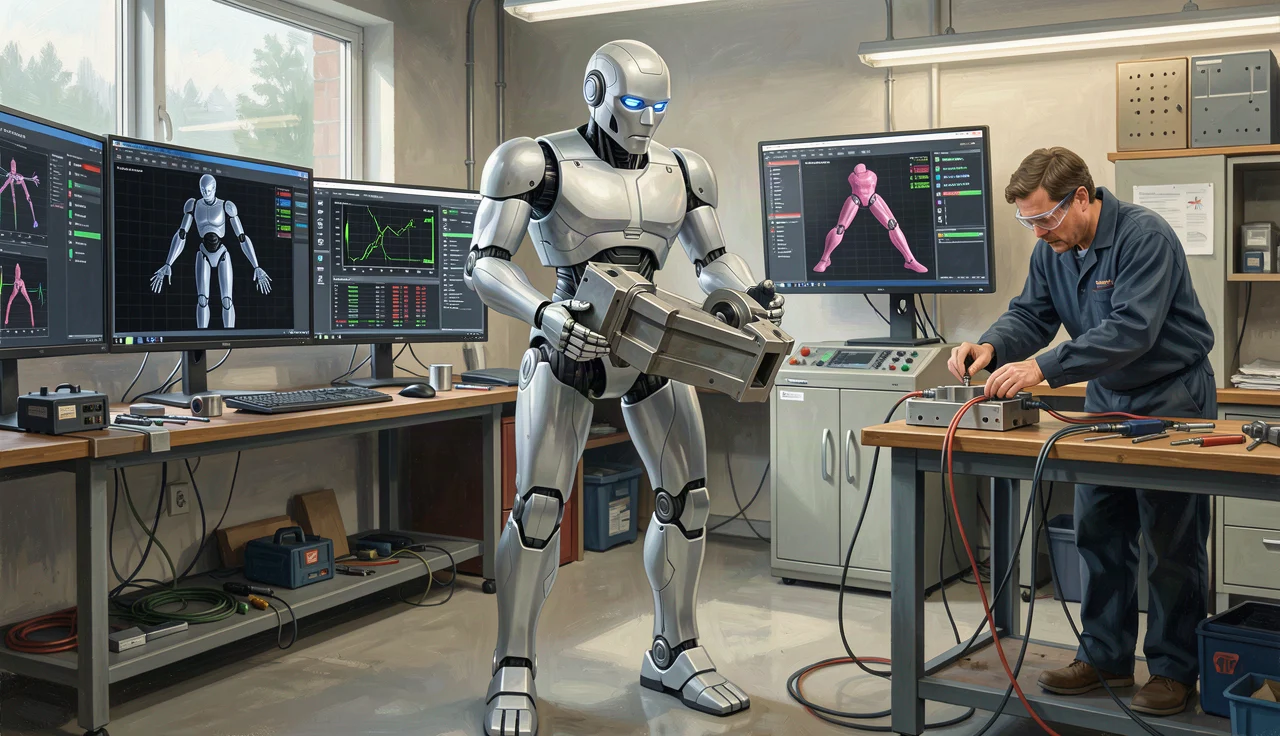
Robotics firm Boston Dynamics has chosen Rohit Prasad as its new chief executive. The appointment puts an executive known for digital assistant software in charge of an engineering house built on mechanical hardware. Prasad is also slated to join the company's board of directors.
Prasad spent a dozen years at Amazon, where he served as a senior vice president and lead scientist. There, he helped direct the development of the voice assistant Alexa and managed work on the Nova family of large language models. Before that tenure, he spent nearly fourteen years at Raytheon BBN Technologies directing machine learning projects for commercial clients and the United States government.
The leadership shift follows the departure of Robert Playter, who stepped down earlier this year after six years as chief executive. Playter was only the second person to lead Boston Dynamics across its three decades of operation.
Boston Dynamics framed the hiring around what it calls physical AI, which means combining complex digital models directly with mobile machinery. Under Prasad, the company wants software to guide physical robots through practical tasks in everyday industrial workplaces.
Automotive giant Hyundai Motor Group, which controls Boston Dynamics, is backing this direction. Hyundai is currently moving to buy out the remaining shares held by SoftBank Group Corp to secure full control of the robotics business. Hyundai leaders plan to connect the robotics division with their global manufacturing and supply networks.
For years, Boston Dynamics was best known to the public for internet videos of agile machines sprinting, jumping, and dancing. The current goal is very different. Management wants to transform the research-heavy shop into a routine high-volume supplier of working humanoid machines.
Scaling up will require a massive shift in factory output. Earlier this year, reports indicated the company was producing only four of its Atlas humanoid robots each month. By 2028, internal goals call for building 30,000 units. The company plans to sell 5,000 of those to outside buyers and keep 25,000 to work inside car assembly lines operated by Hyundai and Kia.
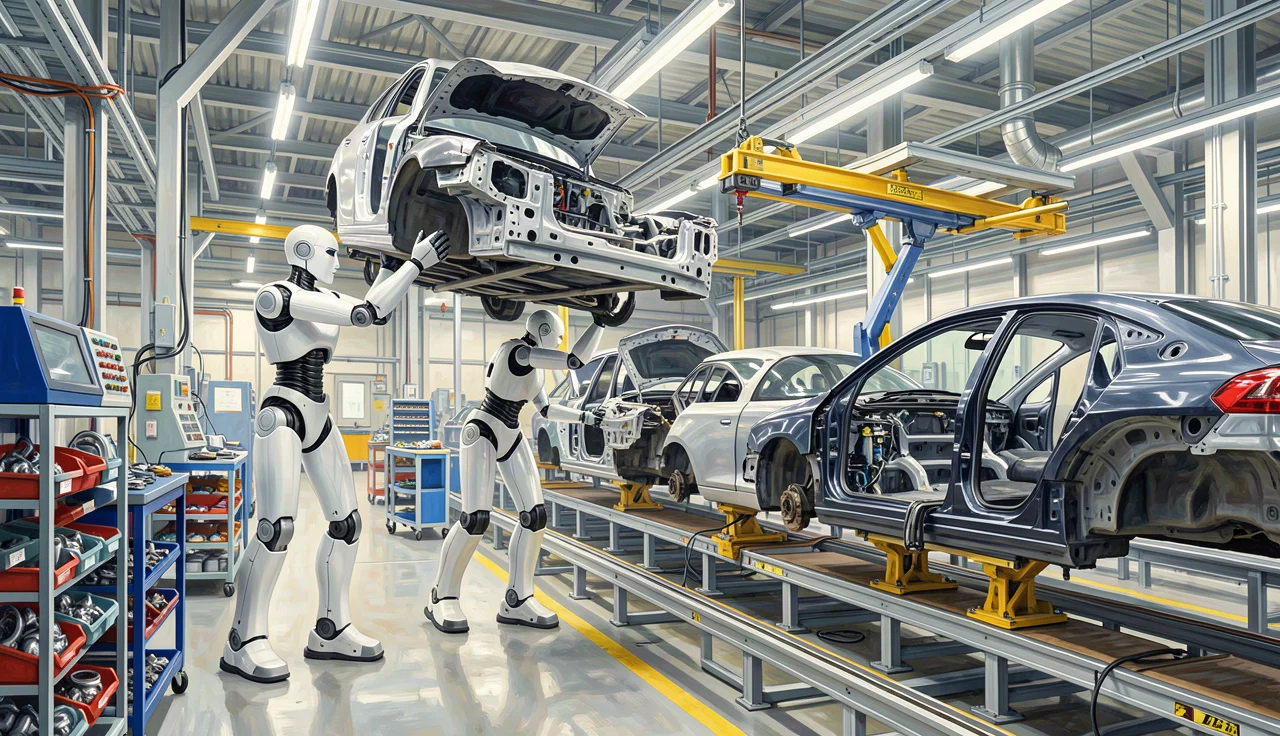
Production and deployment will centre partly on Hyundai's automotive plant in Savannah, Georgia, where robots are planned to both construct vehicles and help build more robots. The latest Atlas model is designed for heavy manual labour, capable of reaching shelves seven and a half feet high and carrying loads up to 110 pounds.
Cost remains a major hurdle on the path to high volume. Industry estimates suggest each Atlas robot currently costs between $130,000 and $140,000 to construct. The company hopes that once cumulative output passes 50,000 machines, unit manufacturing costs will drop toward $30,000.