

Photo credits
Air Force tests Starfall capsule carrying survival kit
The Air Force used a SpaceX Falcon 9 to launch a Starfall reentry capsule carrying a military survival kit for a rapid‑delivery test.
25 Oct 2026 0 reads Compiled with AI
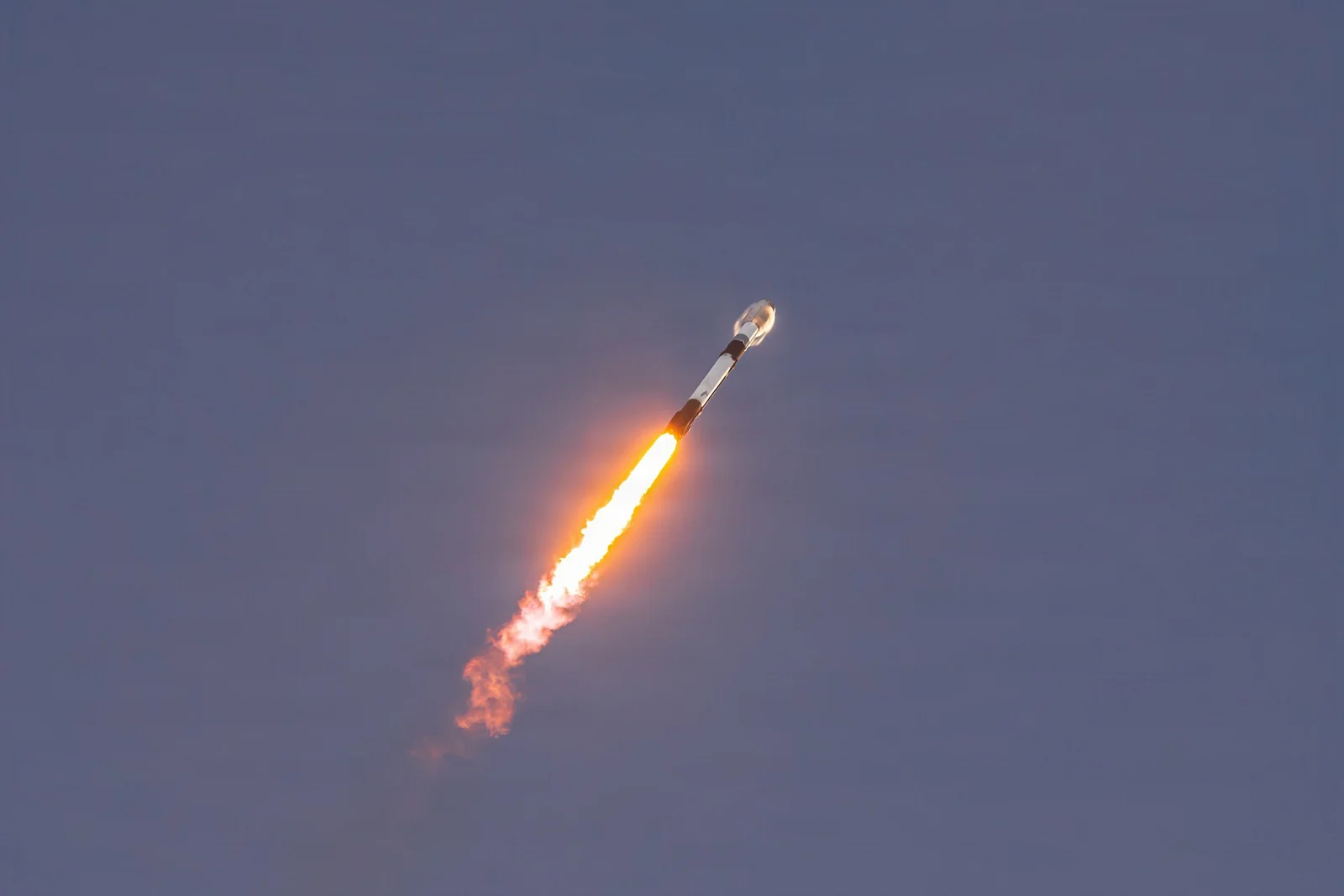
The U.S. Air Force Research Laboratory (AFRL) launched a Starfall reentry capsule on a SpaceX Falcon 9 on Oct. 20, 2026. The capsule rode the Bandwagon‑5 rideshare mission, which carried 32 payloads from Cape Canaveral Space Force Station. The 10.2‑ft (3.1‑m) disk‑shaped capsule carried an agile cargo pod fitted with sensors to record temperature, shock and vibration during launch and reentry. The module also carried a cold‑gas thruster for precise maneuvering and a recovery parachute for a gentle landing. The test included a fit check of a UNI‑PAC III inflatable life raft for future payloads. The data is meant to show whether military cargo can survive the stresses of spaceflight. The experiment was part of AFRL’s Rocket Cargo program, which looks at using commercial rockets for rapid point‑to‑point delivery. The goal is to move a C‑17’s worth of cargo anywhere in under an hour, though the program remains in research and development.
Testing the capsule’s resilience
The cargo pod carried a survival kit with standard nautical supplies, including emergency locator beacons, a reverse‑osmosis desalination unit, bottled water, MREs, a handheld radio, duct tape, matches, a torch, space blankets, a first‑aid kit and a compass. It also carried batteries, a satellite‑communications‑enabled tracker and other electronics. Sensors measured internal temperature, vibration and g‑loads during launch.
Brigadier General Douglas P. Wickert, AFRL’s technology executive officer, said the launch was a 'demonstration of how AFRL is partnering with industry to burn down risk, collect hard data, and deliver war‑winning technologies.' The test is part of a broader Rocket Cargo effort that also involves Blue Origin, Rocket Lab, Sierra Space, Anduril, Inversion Space and Outpost Space. AFRL plans further tests to evaluate recovery, cost and reliability of large‑payload deliveries. The program could one day support resupply of forces in remote or contested locations, disaster relief, or responses to chemical, biological, radiological and nuclear hazards. Launch cost, recovery time and the risk of failure remain key concerns that the program must address before it can become operational.
newatlas.com , theaviationist.com , 19fortyfive.com , defensemirror.com