

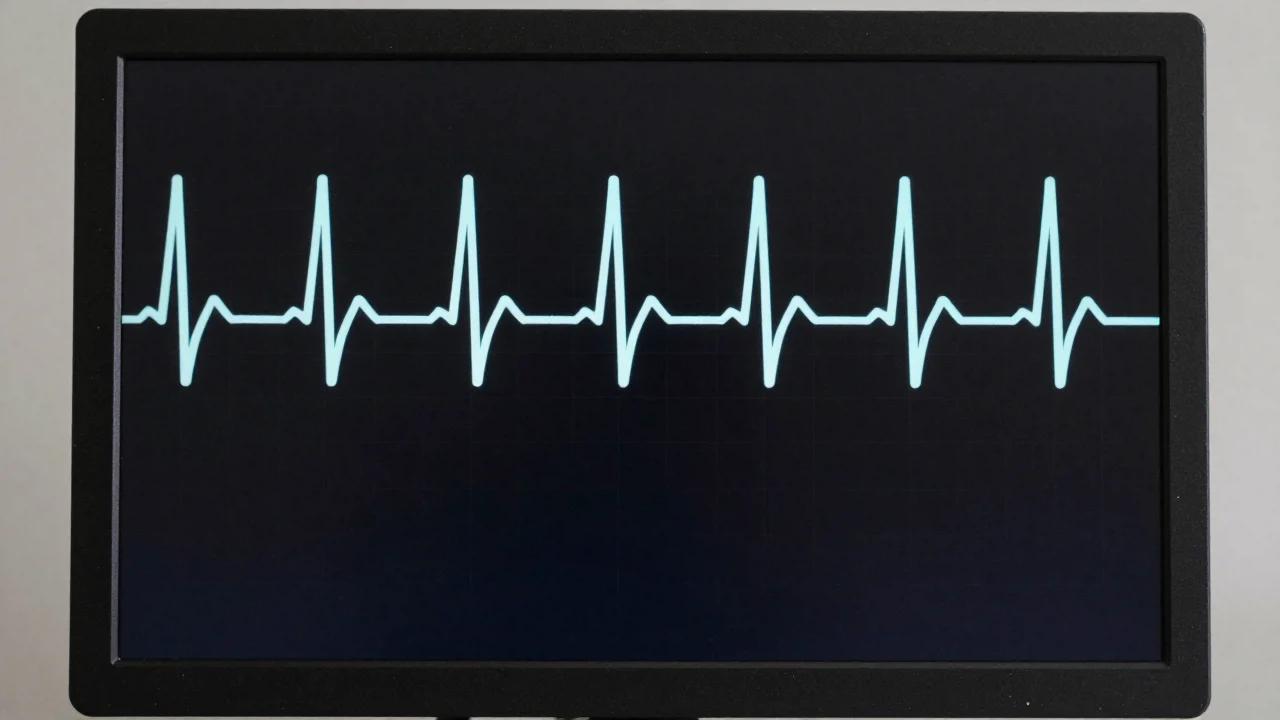
AI spots hidden heart signal to predict sudden death
An AI algorithm can spot a subtle heart signal that predicts sudden cardiac death earlier than current tests.
21 Oct 2026 0 reads Compiled with AI
Sudden cardiac death happens when the heart’s electrical system fails suddenly, stopping the heart from pumping blood. It can strike without warning, even in people who seem healthy. In the United States alone, more than 300,000 people die each year from sudden cardiac death. CPR can restore circulation in some cases, but about 90% of people who suffer a cardiac arrest outside a hospital do not survive. Doctors have long struggled to spot the people most at risk, despite a treatment that can save lives.
Researchers at the University of California, Berkeley have found a previously unnoticed electrical signal in the heart that could help predict sudden cardiac death before it happens. The team built an artificial intelligence system that reads routine electrocardiograms (EKGs) and looks for subtle patterns associated with later death. They fed the algorithm over 440,000 EKGs collected in Sweden over six years and linked each recording to a death certificate. By training on healthy people, patients with known heart problems, and those who died from cardiac causes, the AI learned which waveforms hinted at danger.
AI discovers hidden heart signal
When tested on new patient data from San Diego and Taipei, the AI did better than the standard clinical test that uses ejection fraction. The algorithm flagged a group of patients with a 7% annual risk of sudden cardiac death, compared with 4.6% for those identified by conventional methods. Many people the AI highlighted would not have been considered high risk under current criteria. This suggests that ordinary EKGs could reveal patients who would otherwise be missed.
The researchers plan to use the tool in hospitals across Sweden, Taiwan, and the United States. Doctors could contact patients the AI marks as high risk and offer them wearable monitors that record heart activity continuously. These devices might provide extra evidence to guide decisions about implantable defibrillators. However, scientists still need to study whether using the AI to direct treatment actually lowers death rates.
From detection to prevention
Building the algorithm took nearly a decade of collecting detailed medical data, which is one of the biggest obstacles to clinical AI. The team hopes that studying the electrical abnormalities identified by the model will explain what happens inside the heart before it stops. They have also launched a website where people can enter basic information and get an estimate of their sudden cardiac death risk. The research could eventually improve both risk prediction and our understanding of the biology behind sudden cardiac death.