

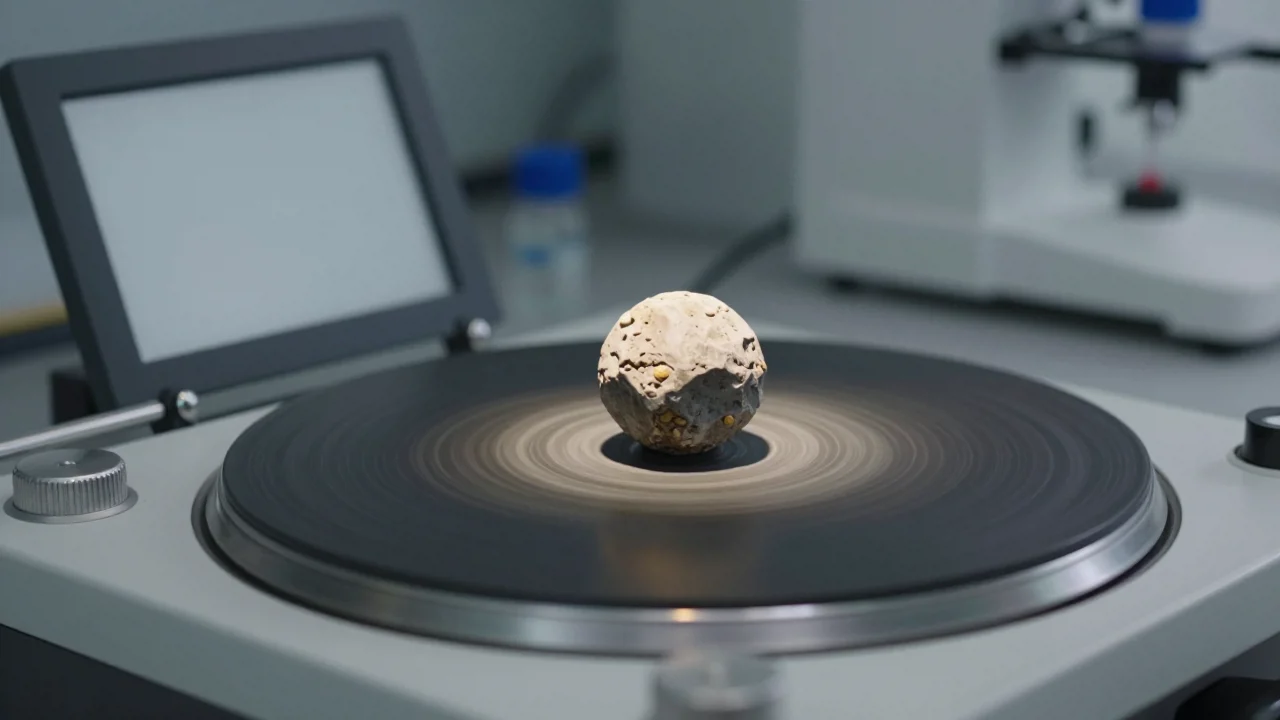
A 1.6‑mile Asteroid Spins in Just Four Minutes
Asteroid 491384, roughly 2.5 km across, completes a full rotation every 4.18 minutes—more than 30 times faster than the spin barrier that keeps larger asteroids intact.
20 Oct 2026 0 reads Compiled with AI
#491384 #Vera C. Rubin Observatory
Asteroid 491384 is a C‑type body about 1.6 miles (2.5 km) wide that whirls around a complete turn every 4.18 minutes, a rate that makes it the fastest ultra‑fast rotating asteroid ever recorded. Its spin period is so short that it turns around once while a cup of tea steeps. The asteroid’s size and speed together make it a record‑holding outlier in the solar system’s small‑body population.
Why the Spin Is Unexpected
Most asteroids larger than about 150 meters are thought to be loose collections of rock, or “rubble piles,” held together mainly by their own weak gravity. When such a body spins faster than about 2.2 hours per rotation, the centrifugal force can fling the pieces apart, much like mud flinging off a bicycle wheel. This limit, called the spin barrier, is rarely crossed by large asteroids. 491384 rotates more than 30 times faster than that threshold, meaning some other force—perhaps internal strength from rock cohesion—must be keeping it intact.
The discovery came from data gathered by the Vera C. Rubin Observatory’s second data preview, combined with other asteroid observations. Researchers built software that automatically examined light curves—brightness variations caused by a rotating irregular shape—and filtered 9,417 asteroids with at least 80 measurements each. Initial analyses flagged 1,487 objects spinning faster than the spin barrier, but after rigorous filtering only 66 candidates remained, including five ultra‑fast rotators like 491384.
If 491384’s rapid rotation is confirmed, it would suggest that some asteroids may be more like lightly cemented rubble than loose gravel, challenging current models of how asteroids form and survive. Future surveys from the Rubin Observatory, expected to catalog millions of small bodies, could use the same software to refine our understanding of asteroid structures and the limits of their stability, potentially reshaping theories about the early solar system’s evolution.